
On this page
- What is a night guard?
- What are the signs of grinding and clenching?
- How can grinding affect teeth, gums and implants?
- Custom or store-bought: which night guard is better?
- Are there downsides to wearing a night guard?
- How do you care for a night guard?
- Care at Perio One
- When to call us
- What to expect
- Common questions
At a glance
- Grinding and clenching often show up as worn or chipped teeth, a sore jaw or morning headaches.
- A night guard protects teeth, gums, implants and crowns from that force; it doesn't cure the habit itself.
- Custom guards fit more precisely and tend to last longer than store-bought ones.
- The grinding-recession link is debated, but added force may add stress to gums that are already thin.
What is a night guard?
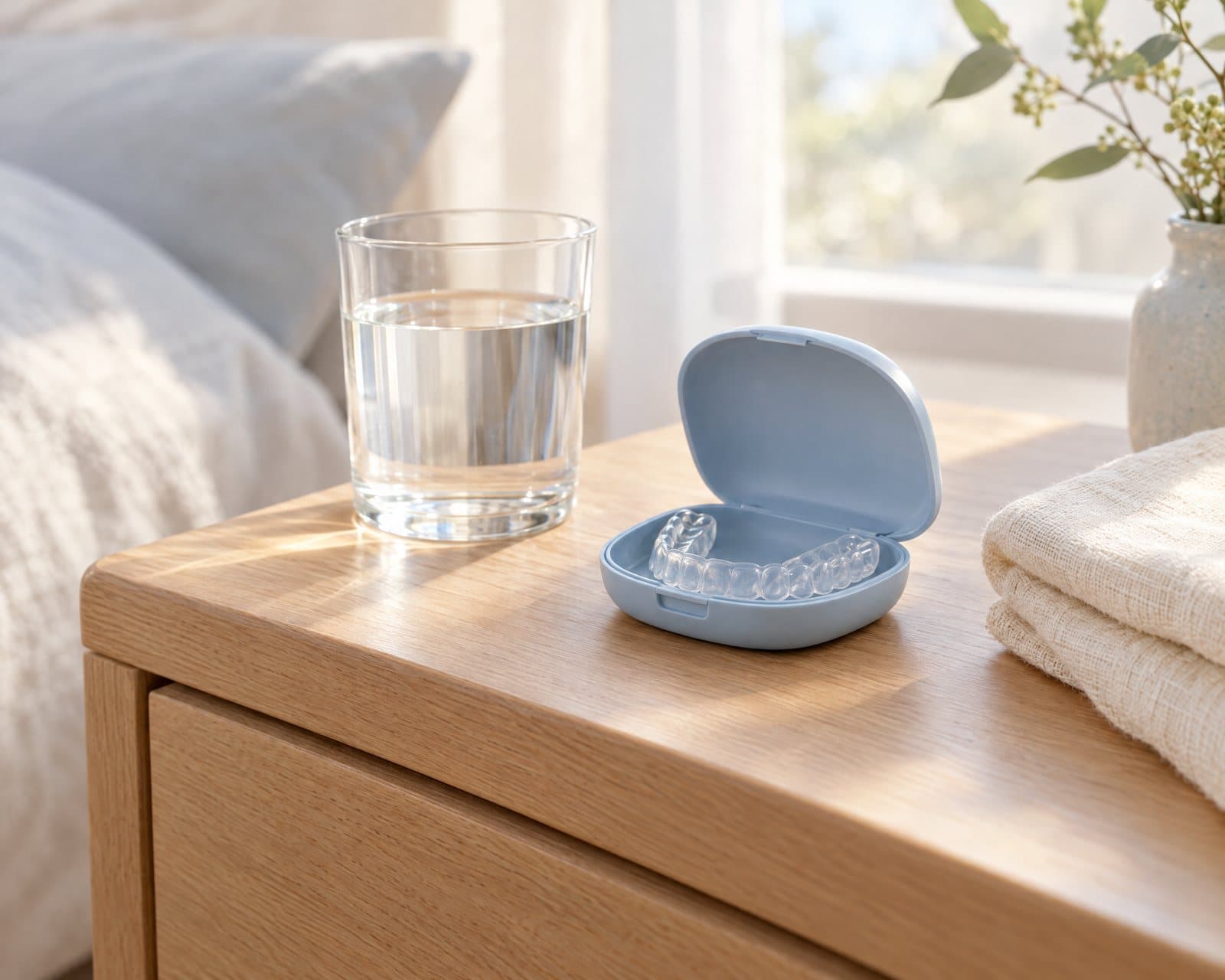
A night guard is a removable appliance you wear while sleeping to cushion your teeth from the force of grinding and clenching. It sits over the biting surfaces of your teeth.
It doesn't stop you from grinding or clenching. What it does is absorb and spread out the force, so it lands on the appliance instead of tooth against tooth.
Guards come in different materials and thicknesses, chosen based on how heavily you grind and what you're trying to protect.
What are the signs of grinding and clenching?
Common signs include teeth that look worn, flattened or chipped, a sore or tired jaw in the morning, and headaches near the temples soon after waking. A partner may also hear grinding at night.
Some people clench during the day too, often without noticing, especially when concentrating or under stress. Waking with sore jaw muscles is one of the more reliable clues, since the teeth themselves can look fine early on.
Your dentist can also spot grinding from wear patterns and flattened points on your teeth, sometimes before you notice symptoms yourself. That's part of what the bite check at your exam looks for.
How can grinding affect teeth, gums and implants?
Grinding puts repeated, forceful pressure on teeth, gums, dental implants and any crowns or fillings you have. Over time, that force can wear down tooth surfaces, chip edges, and loosen a crown or an implant restoration.
Teeth affected by loose teeth and bone loss from gum disease already have a weaker foundation, so that extra force lands somewhere less able to absorb it.
The grinding-recession link is debated. Grinding may add stress to gums that are already thin or receding, alongside causes of receding gums, rather than being the main cause on its own.
Custom or store-bought: which night guard is better?
A custom night guard is made from a mold or scan of your own teeth, so it fits precisely and stays put overnight. A store-bought guard is a generic shape you soften and bite into yourself.
Custom guards tend to be more comfortable, distribute force more evenly, and hold up longer, since they're made to fit one mouth. A store-bought guard can be a reasonable short-term option, but a poor fit can shift overnight or wear through quickly.
A dentist also checks your bite when fitting a custom guard, a step a store-bought one skips entirely.
| What differs | Custom night guard | Store-bought guard |
|---|---|---|
| How it is made | Molded or scanned to fit your teeth | A generic shape you soften and bite into |
| Fit and comfort | Precise, and stays in place overnight | Can feel bulky or shift while you sleep |
| Bite checked by a dentist | Yes, as part of the fitting | No |
| How long it lasts | Usually longer with proper care | Often wears through sooner |
| Cost factors | Materials, the fitting visit and follow-up adjustments | Usually a lower upfront cost |
Are there downsides to wearing a night guard?
A night guard can feel odd or bulky at first, and some people find it takes a few nights to get used to wearing one. A poor fit can also shift your bite slightly if worn for a long time without being checked.
If you snore or have been told you might have sleep apnea, mention that before starting a guard, since some designs may not suit that situation. A different appliance, or a referral, may fit better.
A guard protects against the force of grinding; it doesn't cure the habit that causes it. Stress, sleep and other factors that drive grinding usually need their own attention.
How do you care for a night guard?
Rinse your guard with water each morning, and brush it gently with a toothbrush, without toothpaste, which can scratch the material. Store it in its case when you're not wearing it, away from heat.
A custom guard, cared for well, often lasts a few years before it needs replacing. A store-bought one usually wears out sooner and may need replacing within months.
Bring your guard to checkups so it can be checked for wear and fit. A guard that no longer fits well protects less than it should.
Care at Perio One
At Perio One in Lafayette, a night guard is fitted after an examination looks at your bite, your teeth and any implants or restorations that need protecting. Dr. Randal Comeaux, DDS, Diplomate of the American Board of Periodontology, explains what's driving your grinding pattern and whether a guard is the right fit.
We coordinate with your general dentist on your overall bite and restorations, and referrals are welcome. Once you have a guard, we check it at your regular visits.
When to call us
- Morning jaw pain or headaches
- Chipped, cracked or flattened teeth
- Teeth that feel sore or loose when you bite
- A partner hears grinding at night
- An implant crown that keeps loosening
Our periodontists, Dr. Randal Comeaux and Dr. Lauren Langlois, can talk through what you’re noticing.
Call to scheduleWhat to expect
- Examination
Your bite, teeth and any implants or restorations are checked for wear and fit.
- Impression or scan
For a custom guard, a mold or digital scan captures the exact shape of your teeth.
- Fitting
The guard is adjusted so it sits comfortably and your bite feels even.
- Nightly wear
Wear the guard while sleeping, and rinse and store it each morning.
- Checkups
The guard is checked at regular visits for wear, fit and whether it still protects well.
Common questions
Does a night guard help with gum recession?
It may help indirectly, by easing some of the added force grinding places on already thin or receding gums, though the link between grinding and recession is debated. A guard is one part of managing recession, not a stand-alone treatment for it.
Can a night guard move your teeth?
A well-fitted guard shouldn't move your teeth. A poorly fitted one, worn for a long time without being checked, can shift your bite slightly, which is why regular checkups matter.
How long does a night guard last?
A custom guard, cared for well, often lasts a few years. A store-bought guard usually wears out sooner and may need replacing within months.
Is it bad to wear a night guard every night?
No, nightly wear is how most guards are meant to be used, since grinding often happens most nights rather than occasionally. Just bring it to checkups so its fit and wear can be reviewed.
Does a night guard stop clenching?
Not directly. It protects your teeth, gums and restorations from the force of clenching, but the habit itself often comes from stress, sleep patterns or other factors that need their own attention.
Sources
- Cleveland Clinic: Bruxism (teeth grinding)
- MouthHealthy (American Dental Association): Teeth grinding
- Cleveland Clinic: Mouth guards
- National Institute of Dental and Craniofacial Research: TMD
This page is general education, not a diagnosis. Your periodontist will recommend care after an examination.