
On this page
At a glance
- VELscope® shines a blue light that makes tissue glow differently depending on its health.
- It's an extra look added onto the visual and touch screening included in every exam, not a stand-alone test.
- It can flag harmless, irritated areas along with anything more serious; a biopsy is what tells the difference.
- Tobacco, alcohol, HPV, sun exposure on the lips and age all raise the risk of oral cancer.
What is VELscope®?
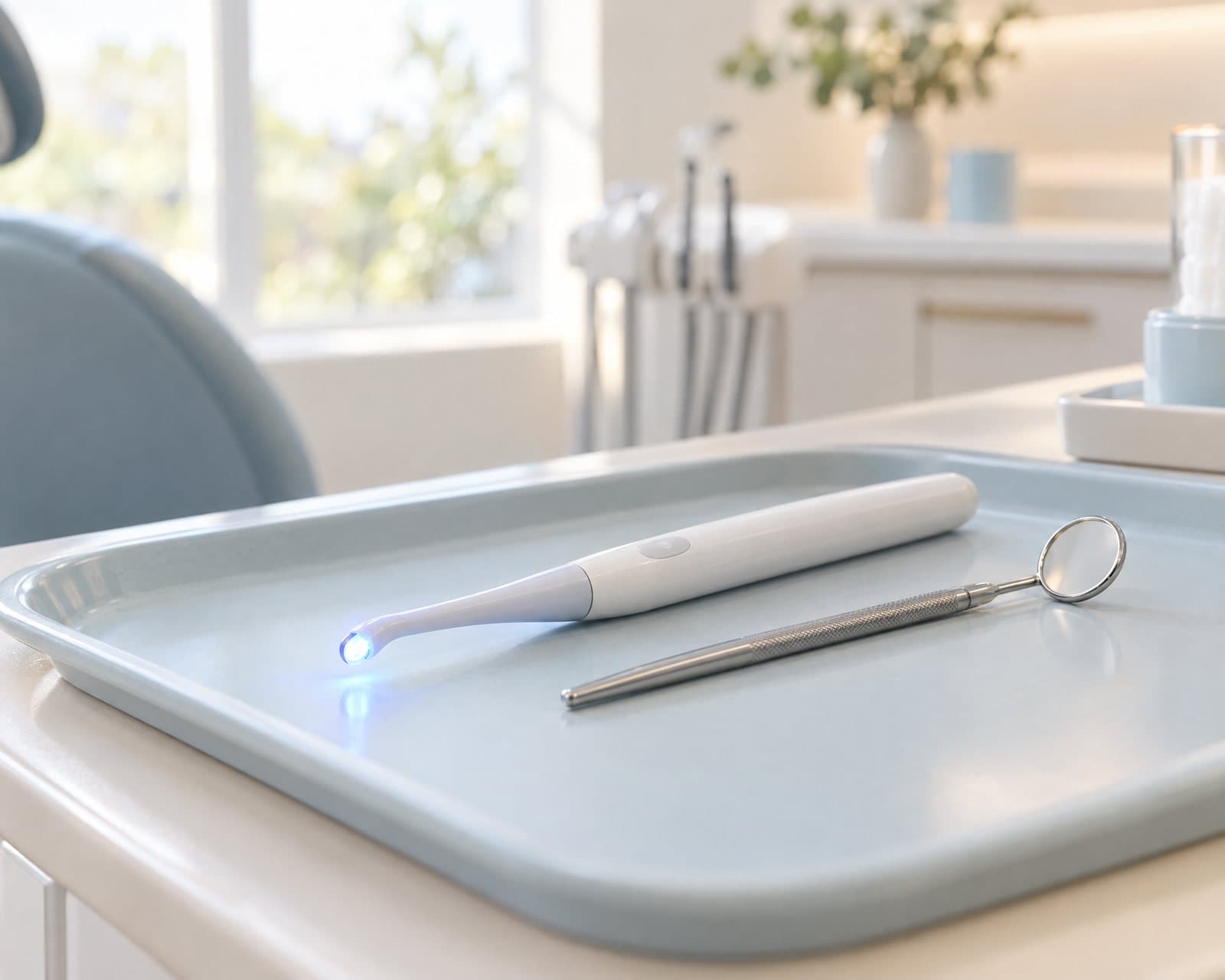
VELscope® is a hand-held device that uses light to help highlight tissue changes in the mouth. It's used as an add-on during a regular checkup, alongside the visual and touch screening every exam already includes.
It doesn't replace anything; it adds one more look. Your periodontist still relies mainly on seeing and feeling your tissue directly.
How does a VELscope® check work?
The device shines a blue light into your mouth, and healthy tissue naturally glows a pale green in response. Tissue that has changed, for reasons that range from irritation to something more serious, tends to look darker or uneven.
The check itself takes only a couple of minutes and needs no rinse, dye or discomfort. Your periodontist looks through the device while moving it around your cheeks, gums, tongue and the floor of your mouth.
What does it add to a regular oral cancer screening?
Every periodontal exam already includes a visual and touch check of your mouth and throat. VELscope® adds a light-based look on top of that, in case it highlights something the eye alone missed.
How much it adds is genuinely debated. Dental guidelines have not found enough evidence that light-based devices catch more than a careful visual and touch exam on its own. It's offered as an extra look rather than a proven upgrade.
See the exams and technology overview for how this fits alongside other tools.
What are the limits of light-based screening?
VELscope® can't tell the difference between cancer and ordinary irritation, such as a canker sore or a spot rubbed by a denture. Both can make tissue look different under the light, which is why an unusual area isn't treated as an answer by itself.
It's not a diagnosis, and it doesn't rule cancer out either. Only a biopsy, tissue examined under a microscope, can actually diagnose what an area is.
What happens if an area looks different?
Most unusual areas turn out to be minor irritation that settles on its own. When something looks different, the usual next step is a recheck in about two weeks, to see whether it has changed or healed.
If the area hasn't resolved, or looks concerning from the start, you're referred for a biopsy or to a specialist who can do one. Waiting to see if something changes is reasonable for many spots; a sore that doesn't improve should always be looked at again.
Who is at higher risk for oral cancer?
Tobacco use, in any form, and heavy alcohol use both raise the risk, especially together. HPV infection, sun exposure on the lips and older age are added risk factors.
Tobacco and gum health are connected in other ways too, since tobacco affects the gums beyond cancer risk. Anyone with these risk factors benefits from regular screening, whether or not VELscope® is included.
Care at Perio One
At Perio One in Lafayette, an oral cancer screening by look and touch is part of every examination, whether or not VELscope® is added. Dr. Randal Comeaux, DDS, Diplomate of the American Board of Periodontology, explains any finding in plain language before deciding on next steps.
We coordinate with your general dentist and welcome referrals. Ongoing screening continues at your maintenance visits, on a schedule set for you.
When to call us
- A sore, lump, or white or red patch in your mouth that lasts more than two weeks
- Trouble swallowing or a hoarse voice that doesn't go away
- Numbness in your lip or tongue
- A sore that bleeds easily
Our periodontists, Dr. Randal Comeaux and Dr. Lauren Langlois, can talk through what you’re noticing.
Call to scheduleWhat to expect
- At your exam
A visual and touch oral cancer screening is included at your regular periodontal visit.
- The VELscope® check
If it's offered, the light-based check adds a couple of minutes and needs no rinse or dye.
- Findings explained
Dr. Comeaux tells you right away whether anything looked different and what it might mean.
- If something looks different
Most areas are simply rechecked in about two weeks; a few are referred for a biopsy.
- Ongoing screening
Screening continues at your regular maintenance visits, especially if you have risk factors.
Common questions
Is VELscope worth it?
It can add an extra look alongside the visual and touch exam every visit already includes, though evidence that it catches more than that exam alone is limited. Many periodontists still offer it as one more layer of screening.
What does VELscope detect?
It highlights tissue that looks different under blue light, which can include anything from ordinary irritation to something that needs a closer look. It doesn't detect cancer specifically; it flags areas worth watching or biopsying.
How accurate is VELscope?
It can miss things and flag things that turn out to be harmless, since inflammation and other ordinary changes can also glow differently. That's why any unusual finding leads to a recheck or referral rather than a firm answer on its own.
How often should you get an oral cancer screening?
A look-and-touch screening is part of every regular periodontal exam, so most people are screened at their usual visit interval. Tobacco or alcohol use, or other risk factors, may call for more frequent checks.
Is VELscope safe?
Yes. It uses ordinary light rather than radiation, and the check itself is quick and involves no rinse, dye or discomfort.
Sources
- National Institute of Dental and Craniofacial Research: Oral cancer
- Cleveland Clinic: Oral cancer screening
- MouthHealthy (American Dental Association): Oral cancer
- MedlinePlus: Oral cancer
This page is general education, not a diagnosis. Your periodontist will recommend care after an examination.