
On this page
At a glance
- The upper back jaw often has thin bone because the sinus sits close above it, especially years after a tooth is lost there.
- A sinus lift can be done through a small window near the cheekbone, or, for smaller lifts, through the socket where the implant will go.
- Sometimes the implant is placed at the same time as the lift; other times it waits for the graft to mature.
- Healing commonly takes four to 12 months, depending on how much lift was needed.
- Gentle sinus habits, like avoiding forceful nose blowing, protect the graft while it heals.
What is a sinus lift?
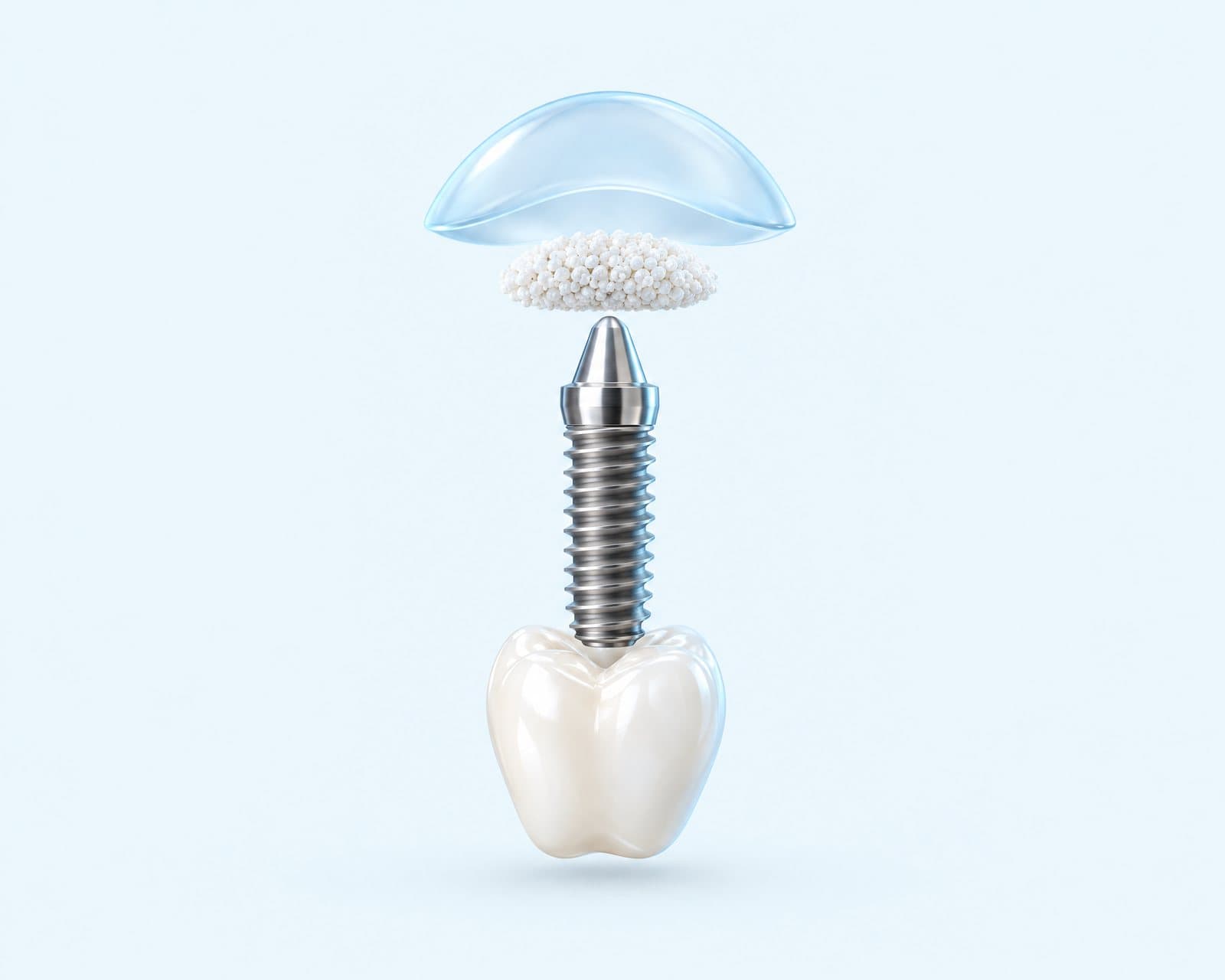
A sinus lift, also called sinus augmentation, adds bone beneath the sinus in the upper back jaw so an implant has enough bone to anchor into. It is a bone grafting procedure, not surgery on the sinus itself.
The sinus is an air-filled space above the upper back teeth, and its floor sits close to the roots of those teeth. When bone in that area is thin, a sinus lift gently raises the sinus floor and fills the new space with graft material.
This procedure is one type of dental bone graft, chosen specifically for the upper back jaw.
Why might you need a sinus lift?
The upper back jaw often lacks bone for a few reasons. The sinus naturally sits low in some people, and it can drop further after a back tooth is lost, since there is no longer a root holding that area firm.
Long-term denture wear, gum disease that reached the bone, or simply the years since a tooth was removed can all leave less bone than an implant needs there.
A 3D scan, called a cone beam CT scan, measures exactly how much bone is left below your sinus and how far it would need to be lifted.
How is a sinus lift done?
A sinus lift is done one of two ways, chosen by how much bone is missing. Both use local anesthetic, and both add graft material below the sinus floor.
The side-window approach opens a small window in the bone near the cheekbone area to lift the sinus floor directly. It is used for larger lifts, and it is the more established, well-studied approach.
The through-the-socket approach works through the site where the implant will go, gently pushing the sinus floor up from below. It suits smaller lifts and can sometimes be combined with placing the implant that same day. A piezoelectric instrument, which cuts bone with ultrasonic vibrations, is sometimes used to open the bone gently in either approach.
| What differs | Side-window (lateral) approach | Through-the-socket (crestal) approach |
|---|---|---|
| How the sinus is reached | Through a small window in the bone near the cheekbone | Through the socket where the implant will go |
| Often used when | More bone is needed, or the lift is larger | A smaller lift is needed |
| Implant at the same time | Sometimes, if the bone is stable enough | Often, when the lift is small |
| Early recovery | Swelling over the cheek for a few days | Usually a bit milder |
What is recovery like after a sinus lift?
Recovery from a sinus lift is similar to other bone grafts, with swelling and mild discomfort over the cheek and jaw for a few days. Most people return to normal activities within a few days, avoiding strenuous exercise a little longer.
Full healing before an implant is placed commonly takes four to 12 months, depending on how much lift was needed and which material was used. A smaller lift combined with the implant may need less waiting time.
Bruising around the eye or cheek is common after the side-window approach and fades over one to two weeks, much like a bruise anywhere else on the face.
Which precautions protect your sinus while it heals?
Protecting the sinus while it heals means avoiding pressure changes that could disturb the graft. Avoid blowing your nose hard, and if you need to sneeze, do it with your mouth open.
- Avoid blowing your nose forcefully for the first couple of weeks
- Sneeze with your mouth open rather than holding it in
- Ask about flying or diving before you travel, since pressure changes can affect a healing sinus
- Avoid using a straw or smoking, both of which create suction in the mouth
- Keep any follow-up appointments so healing can be checked
What are the risks of a sinus lift?
The main risk during a sinus lift is a tear in the thin membrane lining the sinus. A small tear is usually repaired during the same procedure. A larger one may mean stopping, letting the area heal and trying again later.
Sinus infection and, less often, a graft that does not fully take are other risks. Let us know about any long-standing sinus problems, since they can affect healing.
If a sinus lift is not a good option for you, alternatives include a shorter or angled implant. In a full arch, the All-on-4® approach angles back implants to avoid the sinus area.
What affects the cost of a sinus lift?
Cost depends mainly on which approach is used and how much lift is needed, along with whether the implant is placed at the same time. Your exam and imaging determine those specifics.
- Which approach is used, side-window or through-the-socket
- The graft material chosen
- Whether the implant is placed at the same visit or later
- Imaging used to plan the lift
- Follow-up visits while the graft heals
Care at Perio One
At Perio One, sinus lifts are usually planned with 3D cone beam CT imaging. This lets Dr. Randal Comeaux, DDS, Diplomate of the American Board of Periodontology, see the exact shape of your sinus and the bone below it before any procedure begins.
Dr. Comeaux explains what the imaging shows and answers your questions about the approach, the timeline, and what your implant plan will look like.
We coordinate with your general dentist in Lafayette throughout, referrals are welcome, and your implant is followed afterward in our periodontal maintenance program.
When to call us
- An upper back tooth is being removed and you are considering an implant afterward
- You have long-standing sinus problems and are planning dental implants
- After a sinus lift: a fever, swelling that spreads or worsens, a nosebleed that won't stop, or mouth bleeding that firm pressure doesn't control. Call us right away. If it's severe, or breathing or swallowing is a struggle, go to an emergency room or call 911.
- Graft granules coming from your nose after the procedure
Our periodontists, Dr. Randal Comeaux and Dr. Lauren Langlois, can talk through what you’re noticing.
Call to scheduleCommon questions
Is a sinus lift painful?
The procedure itself is done with local anesthetic, so you should feel pressure rather than pain. Afterward, mild soreness and swelling over the cheek are common for a few days.
How long does a sinus lift take to heal?
Full healing before an implant is placed commonly takes four to 12 months, though a smaller lift combined with the implant may need less time.
What should you not do after a sinus lift?
Avoid blowing your nose hard, sneeze with your mouth open instead of holding it in, and skip using a straw or smoking, since all of these change pressure in the sinus.
Is a sinus lift a major surgery?
No. It is typically done in the office with local anesthetic, much like other bone grafting procedures, though the side-window approach involves more steps than a small through-the-socket lift.
Can a sinus lift cause sinus problems?
It can occasionally lead to a sinus infection or, rarely, ongoing sinus symptoms, which is why long-standing sinus problems are discussed before the procedure. Most people heal without any lasting sinus issues.
Why do I need a sinus lift?
Because imaging shows too little bone below your sinus to support an implant safely on its own. Lifting the sinus floor and adding graft material creates the bone an implant needs.
Sources
This page is general education, not a diagnosis. Your periodontist will recommend care after an examination.