
On this page
At a glance
- A thin probe measures the space between your gum and each tooth; healthy pockets are shallow and don't bleed.
- The exam also checks bleeding, recession, loose teeth and your bite, plus a look at the rest of your mouth.
- Dental X-rays show bone levels and decay that a visual check can't; a few types cover different needs.
- Most healthy adults are checked about once a year; deeper pockets or active disease call for more frequent visits.
What is a periodontal exam?
A periodontal exam is a full check of the gums, bone and tissue that hold your teeth. It goes beyond a quick look, measuring around every tooth rather than a few spots. The result is a baseline your periodontist can compare future visits against.
The exam is recommended for anyone starting care with a periodontist, and it's often repeated at intervals after that. It's the same exam whether you were referred for bleeding gums or for a routine check.
What happens during a periodontal exam?
Most visits start with a review of your health history and any medicines you take, since some conditions, covered in gum disease and your overall health, affect your gums. A thin probe then measures the pocket around every tooth, and each tooth is checked for looseness and bleeding.
Your bite and the root-fork areas between the roots of back teeth are checked too, since disease can hide there. The visit also includes a visual and touch check of your cheeks, tongue, lips and throat, a routine part of every exam. An optional light-based add-on, VELscope®, is sometimes offered alongside it.
Most people feel some pressure from the probe, but the exam itself shouldn't hurt. Tell us if any area feels sharp or tender, since sensitivity can vary from tooth to tooth.
What do your pocket numbers mean?
Pocket depth is the space between the gum and the tooth, measured in millimeters. Healthy pockets usually measure 1 to 3 millimeters and don't bleed when probed. Deeper pockets, especially ones that bleed, suggest gum disease is active there.
The pattern across your whole mouth matters as much as any single number. A few deep spots point to early, localized disease, while widespread deep pockets and bone loss suggest a more advanced stage of gum disease.
Your chart also becomes the baseline for every future visit. Comparing new numbers against it shows whether an area is healing, holding steady or getting worse.
Which dental X-rays might you need?
X-rays show bone levels and other detail that a visual exam and probe can't. Which type you need depends on what your periodontist is trying to see, from a single tooth to your whole jaw.
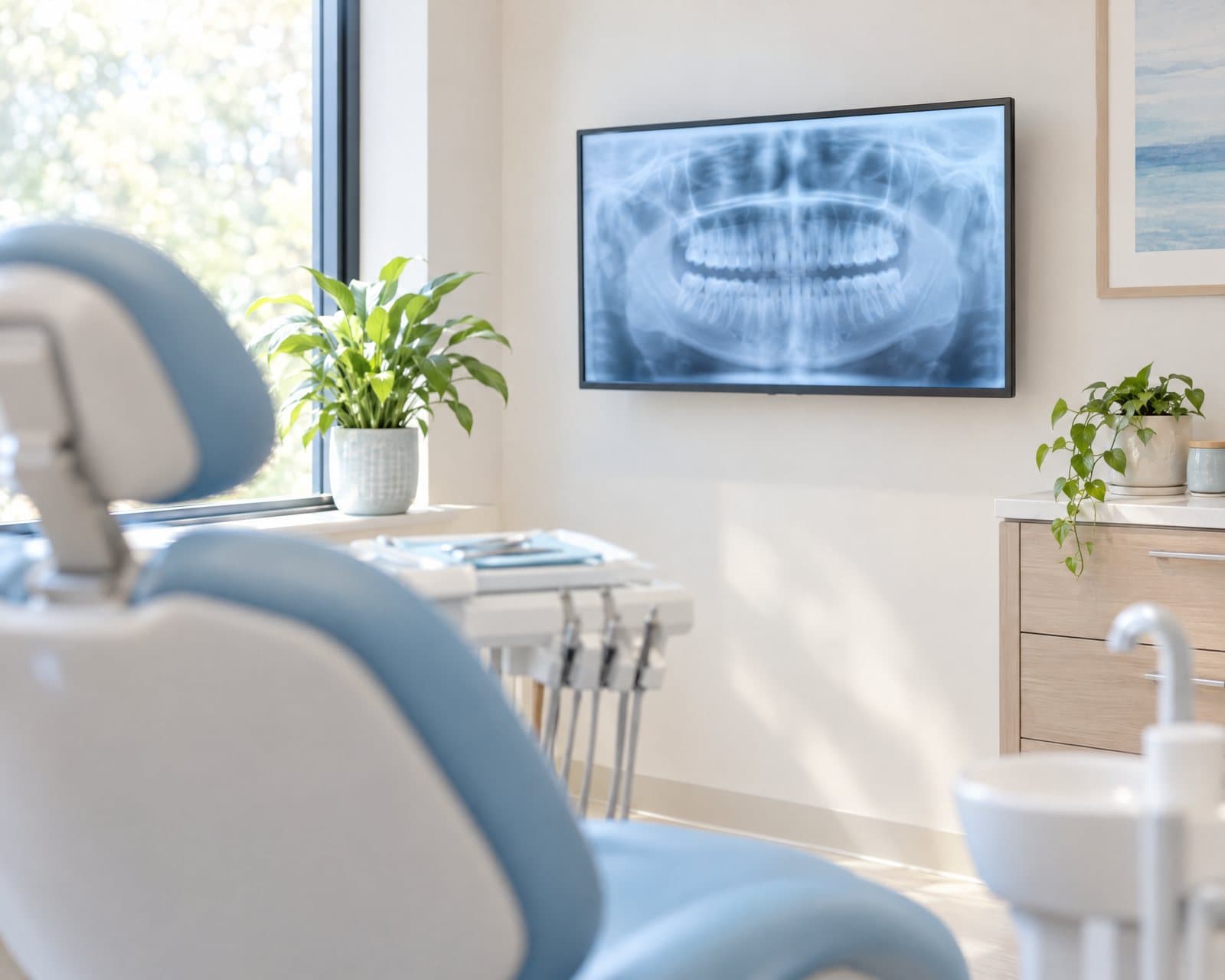
Bitewing and periapical X-rays focus on one area, showing decay or bone levels around a few teeth at a time. A full-mouth series or a panoramic image gives a wider view, useful for spotting patterns across many teeth.
A cone beam CT scan adds a 3D view and is used selectively, mainly before implants or grafts, when flat images don't show enough depth.
| X-ray | What it shows | Often used for |
|---|---|---|
| Bitewing | Decay and bone level between back teeth | Routine checkups |
| Periapical | The whole tooth, root and surrounding bone | A single tooth with a specific concern |
| Full-mouth series | Every tooth and the bone around it | A complete baseline, often at a first visit |
| Panoramic | A wide view of the jaws, sinuses and joints | Checking patterns across the whole mouth |
| Cone beam CT (3D) | Bone in three dimensions, plus nerves and sinuses | Planning implants, grafts or some surgeries |
Are dental X-rays safe?
Dental X-rays use a small amount of radiation, and modern equipment keeps that amount low. Only the images your care actually needs are taken, not a routine full set at every visit.
If you're pregnant, tell us before any X-rays are taken. Needed X-rays can generally still be taken with a few extra precautions, but the timing and choice are discussed with you first.
The oral cancer screening included in every exam, and the optional VELscope® add-on, are look-and-touch or light-based checks, not X-rays. Neither one is a diagnosis on its own, and an area that looks different is watched, rechecked or referred.
How often should your gums be checked?
Most healthy adults are checked about once a year at their regular dental visits. Deeper pockets, active gum disease or certain health conditions call for more frequent checks, sometimes every three to four months.
A lab-based OralDNA® saliva test is occasionally added when the reason gum disease keeps returning isn't clear from the exam alone. See the exams and technology overview for how each tool, test and scan fits together.
Care at Perio One
At Perio One in Lafayette, every visit begins with an examination before any treatment is planned. Dr. Randal Comeaux, DDS, Diplomate of the American Board of Periodontology, reviews your chart and X-rays with you personally.
Findings are explained in plain language, so you know what was measured and why. We coordinate with your general dentist and welcome referrals.
Once your gums are stable, ongoing checks continue through our periodontal maintenance program.
When to call us
- You have been referred for a gum evaluation
- Your gums bleed or look swollen
- A tooth feels loose
- A sore or patch in your mouth lasts more than two weeks
Our periodontists, Dr. Randal Comeaux and Dr. Lauren Langlois, can talk through what you’re noticing.
Call to scheduleWhat to expect
- Referral or a call
Come on your dentist's referral or reach out directly, and bring a list of your medicines.
- Health history
We review your medical history and any medicines that might affect your gums.
- Measuring and charting
A thin probe measures the pocket around every tooth, and bleeding, recession and looseness are recorded.
- X-rays as needed
New X-rays are taken only if yours are out of date or don't cover what we need to see.
- Findings explained
Dr. Comeaux walks you through what the numbers and images show, and what happens next.
Common questions
What do gum pocket numbers mean?
Pocket depth is the space between your gum and tooth in millimeters. Numbers of 1 to 3 are typically healthy; deeper pockets that bleed when probed usually point to active gum disease.
Does a periodontal exam hurt?
You may feel some pressure from the measuring probe, but the exam itself shouldn't hurt. Tell us if an area feels sharp or overly tender, since sensitivity can vary from tooth to tooth.
How long is a periodontal exam?
A first exam usually takes longer than a routine checkup, since it measures every tooth and reviews your health history. Later exams tend to move faster once your baseline is on file.
Are dental X-rays safe during pregnancy?
Tell us if you're pregnant before any X-rays are taken. Needed X-rays can generally still be taken with a few extra precautions, and the timing is discussed with you first.
What should you expect at your first periodontist appointment?
Expect a review of your health history, a full measurement of your gums, and a look at your X-rays, or new ones if needed. You'll leave knowing what was found and what, if anything, comes next.
Sources
- American Academy of Periodontology: Comprehensive periodontal evaluation
- MouthHealthy (American Dental Association): X-rays
- MedlinePlus: Dental x-rays
- Cleveland Clinic: Dental X-rays
This page is general education, not a diagnosis. Your periodontist will recommend care after an examination.