
On this page
- Will you have a gap while you heal?
- What are your temporary tooth options?
- How is a temporary tooth chosen and fitted?
- Which option suits a front tooth, a back tooth or a full arch?
- Why can't a temporary press on the healing site?
- How do you eat with and care for a temporary tooth?
- What affects the cost of a temporary tooth?
- Care at Perio One
- When to call us
- What to expect
- Common questions
At a glance
- A gap can almost always be covered while an implant or graft heals.
- Options range from a removable flipper to a fixed temporary bridge or a tooth attached to the implant itself.
- A temporary must not press on a healing implant or graft, so fit is checked carefully.
- Most temporaries are not built for hard chewing, so eating habits usually shift for a while.
- Wear time varies, often weeks to a few months, depending on what is healing underneath.
Will you have a gap while you heal?
Usually not, if you plan ahead. Most people who have a tooth removed or begin dental implants can wear some form of temporary tooth during the healing months. The right option depends on where the gap is and what is healing underneath it.
Front teeth tend to get the most attention, since a gap there is easy to see when you talk or smile. Back teeth sometimes go without a temporary if chewing there isn't essential, though most patients still prefer to have something in place.
What are your temporary tooth options?
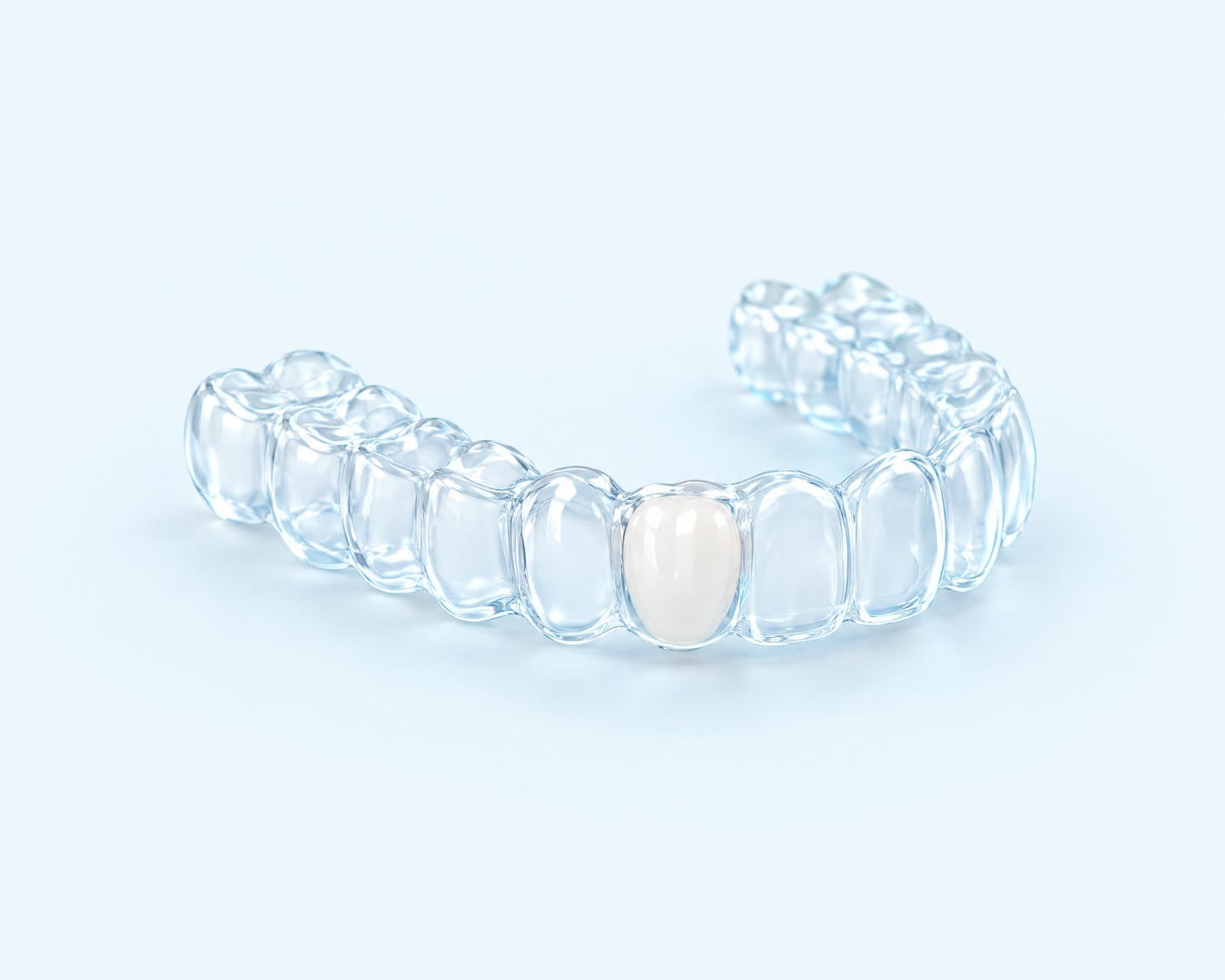
The main options are a removable flipper, a clear retainer with a false tooth attached, and a fixed temporary bridge. Two more cover bigger gaps: a temporary tooth attached directly to a healing implant, and a temporary denture for several missing teeth.
Each fills the visible gap differently and suits different situations, from a single front tooth to a fuller arch.
| Option | Removable? | Often used for | Good to know |
|---|---|---|---|
| Flipper | Yes | One or a few missing teeth | Light and quick to make, but not for hard chewing |
| Clear retainer with a tooth | Yes | A front tooth, for a discreet look | Thin and easy to lose track of if removed often |
| Temporary bridge | No | One or a few teeth in a row | Anchored to nearby teeth, so it stays in place |
| Temporary tooth on the implant | No | A single implant during healing | Must avoid pressure so the implant can heal undisturbed |
| Temporary denture | Yes | Several missing teeth or a full arch | Rests on the gums and may need adjusting as swelling settles |
How is a temporary tooth chosen and fitted?
The choice starts with what is healing underneath: an extraction site, a bone graft or an implant each need different amounts of clearance. Your exam and any imaging show what the temporary needs to avoid.
A flipper or retainer is usually made from an impression or scan taken before or shortly after the tooth is removed. A temporary bridge is shaped to fit snugly against the neighboring teeth. If a graft was placed at extraction, protecting it while it settles, such as with ridge preservation, often shapes which temporary fits best.
Which option suits a front tooth, a back tooth or a full arch?
A front tooth usually calls for a discreet option like a flipper or a clear retainer with a tooth, since appearance matters most there. A back tooth can sometimes go without a temporary, or use a simple temporary bridge, since it is less visible.
For several teeth or a full arch, a temporary denture is common. When implants are stable enough at placement, same day dental implants can mean a fixed temporary tooth goes on the implant that same day, rather than waiting for a separate appliance.
Why can't a temporary press on the healing site?
A healing implant, graft or extraction site needs to stay undisturbed while bone and tissue mature. Pressure from a poorly fitted temporary can loosen a healing implant, disturb a graft, or slow how the gum settles.
That is why temporaries are checked and adjusted at follow-up visits rather than fitted once and forgotten. A temporary that feels tight, rocks, or presses on the site is a reason to be seen promptly rather than wait it out.
How do you eat with and care for a temporary tooth?
Most temporaries are not built for hard chewing, so softer foods and cutting food smaller are common while you wear one. Sticky or very hard foods can crack a flipper or dislodge a retainer, so many patients avoid them until the final tooth is in.
Removable options come out for cleaning, both the appliance itself and the gums underneath. Fixed temporaries are brushed in place, sometimes with extra care around the edges where they meet the gum. Follow whatever wear-at-night instructions you are given, since some temporaries are meant to come out overnight and others are not.
What affects the cost of a temporary tooth?
Cost depends mainly on which type of temporary you need and how many teeth it covers. A simple flipper for one tooth costs less than a temporary denture for a full arch, and a temporary attached to an implant is priced as part of that treatment.
- The type of temporary chosen for your situation
- How many teeth it needs to cover
- Whether it needs adjusting more than once during healing
- Whether it factors into a bridge as the eventual final choice, weighed on the implant vs bridge page
- What your dental plan covers
Care at Perio One
At Perio One in Lafayette, planning for a temporary tooth is part of the conversation from your first examination, not an afterthought. Dr. Randal Comeaux, DDS, Diplomate of the American Board of Periodontology, explains which options protect your healing implant or graft site.
We coordinate with your general dentist, who often makes the temporary and later the final crown, bridge or denture, so both offices work from one plan. Referrals are welcome, and once healing is complete, our periodontal maintenance program supports your new teeth going forward.
When to call us
- A temporary that cracks, loosens or rubs a sore spot
- Pressure or pain at the implant or graft site under a temporary
- A temporary that no longer seats fully
Our periodontists, Dr. Randal Comeaux and Dr. Lauren Langlois, can talk through what you’re noticing.
Call to scheduleWhat to expect
- Plan before the tooth comes out
We discuss temporary options during the same visit where extraction or implant placement is planned.
- Impressions or scans
A mold or digital scan captures your bite so the temporary fits well from the start.
- Fitting
The temporary is placed and checked to make sure it does not press on the healing site.
- Adjustments during healing
Follow-up visits check the fit as swelling settles and the site continues to heal.
- Final teeth
Once healing is complete, the temporary is replaced with your final crown, bridge or denture.
Common questions
Can you get a temporary tooth while waiting for an implant?
Yes. Most patients can wear a removable or fixed temporary while an implant heals, chosen to avoid pressing on the implant site. The specific option depends on where the tooth is and how the implant is healing.
Can you eat with a flipper tooth?
You can eat with a flipper, but softer foods and smaller bites are usually easier on it. Sticky or very hard foods can crack it or pull it loose, so many patients avoid those while wearing one.
How long can you wear a flipper tooth?
Wear time varies with what is healing underneath, often ranging from several weeks to a few months. Your dentist or periodontist will let you know roughly how long yours is expected to last.
Can you wear dentures while waiting for implants?
Yes, a temporary denture is a common option while implants heal, especially when several teeth or a full arch are involved. It may need adjusting more than once as swelling settles and healing progresses.
Do you get temporary teeth while waiting for implants to heal?
Most people do, whether that means a removable appliance, a fixed temporary bridge, or in some cases a temporary tooth attached to the implant itself on the day it is placed.
Sources
This page is general education, not a diagnosis. Your periodontist will recommend care after an examination.