
On this page
- What is a bone graft after tooth extraction?
- Why does the jaw shrink after an extraction?
- Do you always need a socket graft?
- What happens during socket preservation?
- How do you care for a socket graft?
- What are the risks of a socket graft?
- What affects the cost of a socket graft?
- Care at Perio One
- When to call us
- What to expect
- Common questions
At a glance
- The jawbone naturally shrinks after a tooth comes out, since it no longer has a root to support.
- A socket graft fills that space right away, slowing the shrinkage while the site heals.
- Not every extraction needs one; it depends on your plans, the tooth's position, and the shape of the socket walls.
- A few granules coming loose in the first days is normal and not a sign the graft failed.
- An implant is usually considered a few months after the graft has settled.
What is a bone graft after tooth extraction?
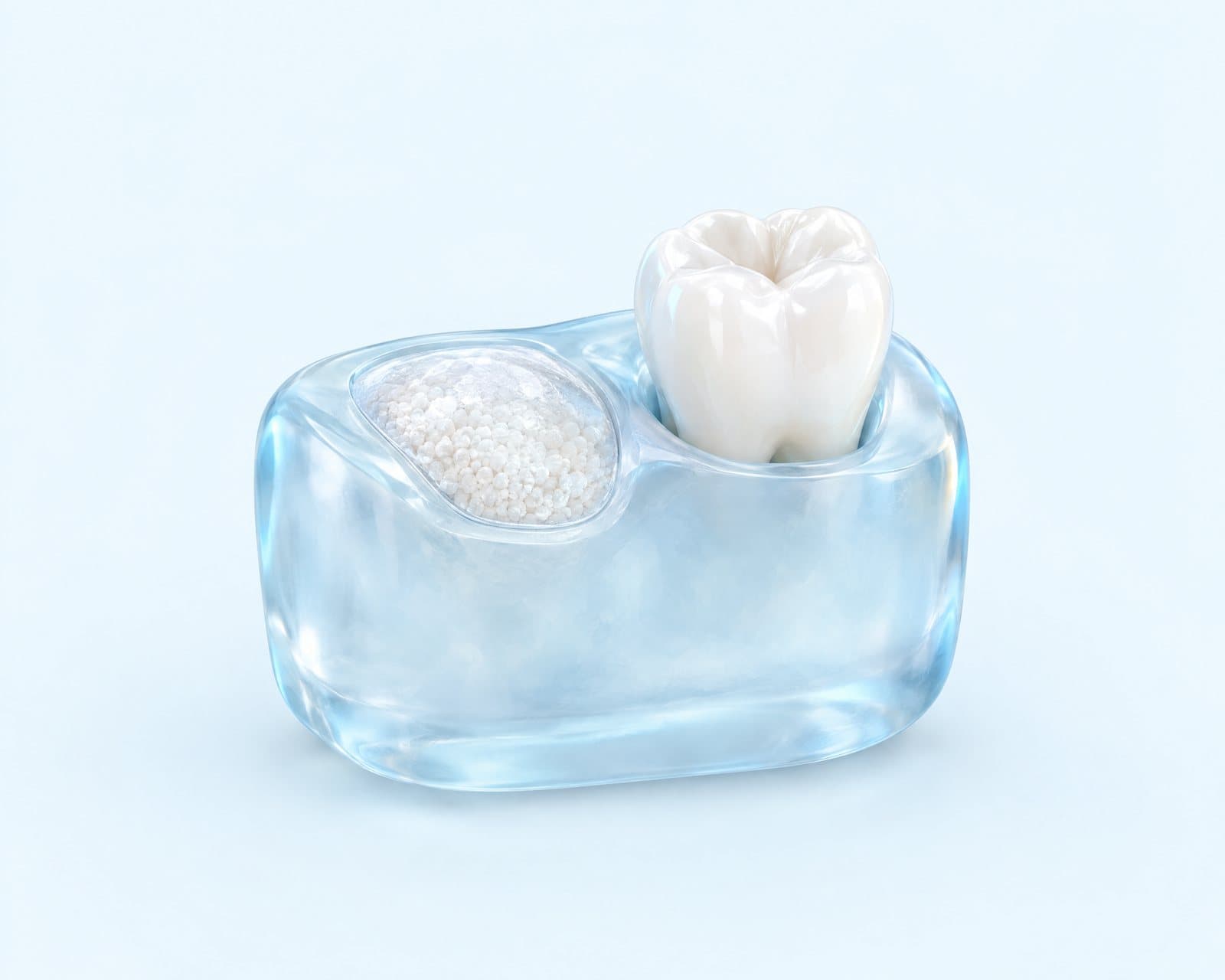
A bone graft after tooth extraction, often called ridge or socket preservation, places graft material into the socket right when a tooth is removed. It helps the jawbone keep more of its width and height while the area heals.
The graft sits in the empty socket, sometimes under a small collagen covering or a few stitches, and becomes part of the healing site over the following months.
It uses the same kinds of dental bone graft materials used elsewhere in implant planning, chosen for the size of the socket.
Why does the jaw shrink after an extraction?
Once a tooth is gone, the bone that surrounded its root no longer has a job to do, so the body gradually resorbs it. Both the width and the height of the ridge can shrink, especially in the first few months.
This shrinkage matters most when you are considering an implant or a fixed bridge later, since both need a certain amount of bone, or a full-looking ridge, to rest on.
If the ridge has already shrunk from an extraction some time ago, ridge augmentation can rebuild it, though starting with a socket graft is usually simpler than rebuilding a ridge later.
Do you always need a socket graft?
A socket graft is not automatic after every extraction. It depends on whether you are planning an implant or bridge, where the tooth sits, and whether the socket's own bone walls are intact enough to heal well without help.
If you have no plans to replace the tooth, skipping the graft can be reasonable. The same is often true when the socket walls are strong and the area is not visible when you smile.
When an implant is likely, a graft is usually recommended to keep both an implant or bridge on the table later. The same holds when the socket has lost a wall from infection or a prior injury.
What happens during socket preservation?
Socket preservation is usually done in the same visit as the extraction. Once the tooth is out, the socket is cleaned, and graft material is placed to fill the space.
A small collagen covering or a few stitches may hold the graft in place while the gum closes over it. You leave that same day with a healing socket rather than an open one.
If an implant is not possible right away, you may wear a temporary tooth while the graft matures, or in select cases have same day dental implants placed instead of a graft.
How do you care for a socket graft?
Aftercare for a socket graft is similar to caring for any extraction site, with a bit more attention to protecting the graft underneath. Skip rinsing on the first day, then rinse gently. For the first few days, avoid straws and smoking, and keep your tongue and toothbrush away from the site.
A few small granules of graft material coming loose in the first days is normal and not a sign the graft failed. Report bleeding that does not slow with firm pressure, or a bad taste that persists.
Most people feel back to normal within a week, and the graft continues maturing quietly under the gum for months afterward.
What are the risks of a socket graft?
Risks are similar to those of any bone graft: infection, a graft that shifts or does not fully take, and swelling that lasts longer than expected.
A socket graft limits shrinkage; it does not fully prevent it, so some narrowing of the ridge can still happen even with a graft in place.
Fever, bleeding that will not slow, or swelling that keeps worsening after the first few days are reasons to call us.
What affects the cost of a socket graft?
Cost depends on the graft material used and whether it is placed alone or alongside other treatment at the same visit. Your exam sets the specifics for your situation.
- The graft material chosen
- Whether it is placed with a simple or a more involved extraction
- Any temporary tooth worn while the site heals
- Follow-up visits while the graft settles
- What your dental plan covers
Care at Perio One
At Perio One in Lafayette, we discuss whether a socket graft fits your plans before any tooth is removed. That way, you understand the reasoning behind the recommendation from Dr. Randal Comeaux, DDS, Diplomate of the American Board of Periodontology.
Dr. Comeaux explains the findings in plain language, including whether your situation calls for a graft or whether skipping it is reasonable.
We coordinate with your general dentist on the timeline to an implant or bridge, and referrals are welcome.
When to call us
- A tooth is scheduled to come out and you are considering an implant
- After the graft: many granules coming out, a bad taste, or swelling that worsens after a few days
- After the graft: a fever, swelling that spreads or worsens, or bleeding that won't slow with firm pressure on gauze. Call us right away; for severe symptoms or trouble breathing or swallowing, go to an emergency room or call 911.
Our periodontists, Dr. Randal Comeaux and Dr. Lauren Langlois, can talk through what you’re noticing.
Call to scheduleWhat to expect
- Extraction
The tooth is removed, and the socket is cleaned and checked.
- Placing the graft
Graft material fills the socket, often under a collagen covering or a few stitches.
- First week
After the first day, gentle rinsing and keeping your tongue and brush away protect the graft while the gum closes over it.
- Wearing a temporary tooth
If needed, a temporary tooth covers the gap while the graft matures.
- Follow-up check
We check the site to see how the graft is settling.
- Planning the implant or bridge
Once the graft has matured, usually after a few months, imaging shows whether the site is ready for the next step.
Common questions
Is a bone graft necessary after tooth extraction?
Not always. It depends on whether you are planning an implant or bridge, where the tooth sits, and whether the socket walls are intact. Your periodontist can tell you whether skipping it is reasonable for your case.
How long after a bone graft can I get an implant?
It commonly takes a few months for the graft to mature enough for an implant, though the exact timeline depends on the size of the socket and how it heals.
What happens if you don't get a bone graft after an extraction?
The socket heals on its own, but the ridge tends to shrink more than it would with a graft, which can make an implant or bridge more involved later.
Is socket preservation painful?
The graft is placed at the same visit as the extraction, while the area is still numb, so most people describe it as an extra step rather than added pain. Some tenderness afterward is normal.
Do I need a bone graft if I'm not getting an implant?
Often not. If you have no plans to replace the tooth and the socket walls are healthy, many patients skip the graft without a problem.
How do you know if a socket graft is healing well?
A follow-up visit and, later, imaging show whether the site is filling in as expected. A few granules coming loose in the first days is normal, not a warning sign.
Sources
- Cleveland Clinic: Dental bone graft
- American Academy of Periodontology: Ridge modification
- American Academy of Periodontology: Dental implant procedures
This page is general education, not a diagnosis. Your periodontist will recommend care after an examination.