
On this page
At a glance
- OralDNA® testing uses a short saline rinse, not a blood draw or a biopsy.
- One panel measures amounts of specific bacteria linked to gum disease; a separate panel looks at genetic risk markers.
- Results may help tailor treatment and how often you need maintenance visits.
- The test adds information to your periodontal exam; it doesn't diagnose gum disease on its own.
What is OralDNA® testing?
OralDNA® testing is a lab test that checks a saliva sample for specific bacteria linked to gum disease. It can separately screen for genetic markers tied to how strongly your body responds to that bacteria. It's ordered alongside a periodontal exam, not instead of one.
The test looks at two different things. One panel measures the amounts of several bacteria known to be associated with periodontitis. A second, separate panel checks genetic markers connected to a stronger inflammatory response to plaque, and you and your dentist decide together whether either, or both, fit your situation.
Perio One may suggest OralDNA® testing when gum disease keeps returning despite careful treatment, or when a strong family history raises the question of genetic risk. It's one more piece of information, layered onto the measurements and X-rays already gathered at your exam.
How is the saliva sample collected?
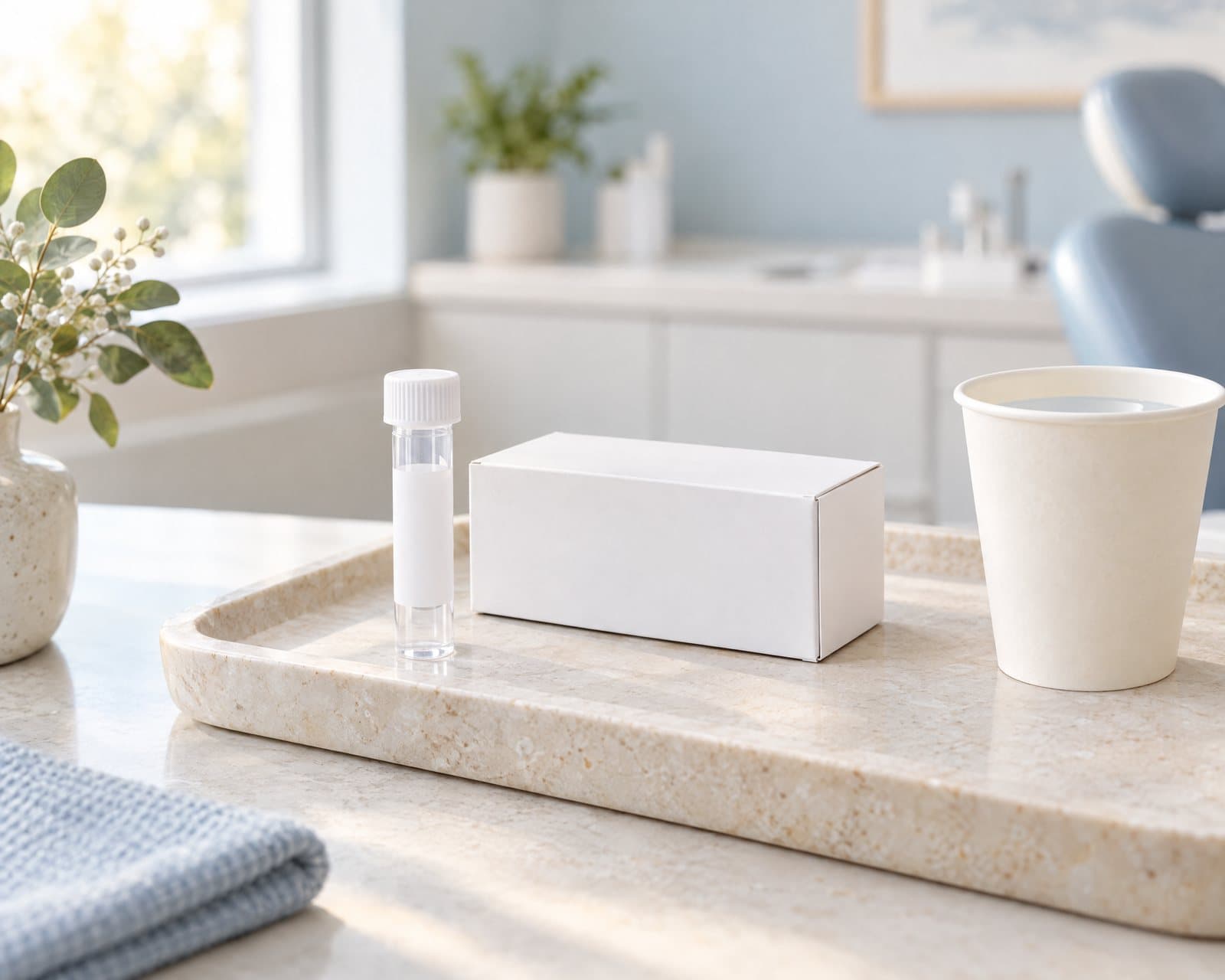
Collecting the sample is simple: you swish a saline rinse around your mouth for about 30 seconds, then spit it into a small tube. There's no blood draw, no biopsy and no discomfort involved.
The tube is sealed and sent to a lab that specializes in oral bacterial and genetic testing. Turnaround is typically one to two weeks, though times vary by lab, and you don't need to change your eating or brushing habits beforehand unless you're told otherwise.
Because the process is so simple, it's usually added onto a regular visit rather than scheduled as its own appointment.
What do the results show?
The bacteria panel reports which specific species are present and in what amounts, since some are more strongly linked to active gum disease than others. The genetic panel, when ordered, reports whether you carry markers associated with a stronger inflammatory response.
Neither result stands alone. Dr. Comeaux reads them together with your pocket measurements, bleeding points and X-rays to build a fuller picture of what's driving your gum disease.
Results may help point to which areas need the most attention, whether an added therapy alongside a deep cleaning may help, and how often maintenance visits should be scheduled afterward.
| Test | What it looks for | How results may be used |
|---|---|---|
| Bacteria test | Amounts of specific bacteria linked to gum disease | May help identify which infection is active and guide treatment choices |
| Genetic risk test | Markers tied to a stronger inflammatory response | May help explain why gum disease returns and support closer follow-up |
Who might benefit from a saliva test?
Saliva testing tends to help most when gum disease keeps coming back despite good home care and regular treatment, or when it runs unusually strong in your family. It isn't a routine add-on for every healthy mouth.
People being treated for periodontitis that isn't responding as expected, or who lost teeth to gum disease at a younger age, are common candidates. So are patients whose bleeding continues even after a deep cleaning and careful brushing.
If none of that describes you, the test may add little beyond what your exam already shows, and gum disease risk factors that you can act on directly may matter more. Dr. Comeaux can tell you whether testing is likely to change your plan.
What are the limits of saliva testing?
OralDNA® testing adds information; it doesn't diagnose gum disease by itself, and a low bacteria count doesn't rule out active disease. The periodontal exam, with its pocket measurements and X-rays, remains the main way gum disease is found and staged.
Research on salivary markers is promising but still developing. Dental groups note that genetic testing has limited use on its own, because gum disease has many contributing causes, not one single trigger. Having a marker doesn't mean disease will develop.
Results also don't replace daily brushing, cleaning between teeth or scaling and root planing when it's needed. They're a supplement to that care, not a substitute for it.
What affects the cost of an OralDNA® test?
Cost depends mainly on which panels are ordered: the bacteria test, the genetic test, or both together. Lab fees, rather than chair time, make up most of the charge.
Ask what your dental plan covers before the sample is sent, since plans vary widely in how they treat lab-based testing. Combining it with a periodontal exam you already have scheduled avoids an extra appointment.
- Whether the bacteria panel, the genetic panel or both are ordered
- Lab fees for processing and reporting the sample
- Whether the sample is collected during a visit you already have scheduled
- What your dental plan covers for saliva-based testing
Care at Perio One
At Perio One in Lafayette, OralDNA® testing is offered selectively, when it's likely to add something useful to your exam findings. Dr. Randal Comeaux, DDS, Diplomate of the American Board of Periodontology, reviews any results alongside your pocket measurements and X-rays. He explains what they do, and don't, mean for your care.
We coordinate with your general dentist so testing fits into your overall plan rather than standing apart from it. Referrals are welcome, and once treatment begins, our periodontal maintenance program helps track how your gums respond over time.
When to call us
- Gum disease that returns after treatment
- Bleeding that continues despite careful home care
- A family history of severe gum disease
Our periodontists, Dr. Randal Comeaux and Dr. Lauren Langlois, can talk through what you’re noticing.
Call to scheduleWhat to expect
- Rinse sample
You swish a saline solution for about 30 seconds and spit it into a small tube.
- Lab analysis
The sample is sent to a lab that measures specific bacteria and, if ordered, genetic risk markers.
- Results reviewed
Dr. Comeaux reviews the report alongside your exam findings and explains what it means for your care.
- Plan adjusted if needed
Treatment focus or visit intervals may be adjusted based on the combined picture.
Common questions
What does an OralDNA test check for?
OralDNA® testing checks a saliva sample for specific bacteria linked to gum disease and, on a separate panel, for genetic markers tied to a stronger inflammatory response. It adds information to your exam rather than standing in for it.
What bacteria cause gum disease?
Gum disease is driven by a mix of bacteria that build up in plaque below the gumline, and some species are more strongly linked to active disease than others. The bacteria panel of an OralDNA® test measures amounts of several of these species in your saliva.
Can a saliva test detect gum disease?
A saliva test can flag bacteria linked to gum disease, but it doesn't detect gum disease on its own. Diagnosis still depends on the periodontal exam: pocket measurements, bleeding points and X-rays.
Is gum disease genetic?
Genetics play a role for some people, and a family history of severe gum disease can raise your risk. The genetic panel of an OralDNA® test looks for markers tied to that stronger inflammatory response, though gum disease has many contributing causes beyond genes alone.
How accurate is OralDNA testing?
Research on salivary bacteria and genetic markers is promising but still developing, so results are best read as one piece of a larger picture. They're combined with your exam findings rather than used alone to diagnose or rule out gum disease.
Sources
- American Academy of Periodontology: Gum disease risk factors
- American Academy of Periodontology: Comprehensive periodontal evaluation
- National Institute of Dental and Craniofacial Research: Periodontal (gum) disease
This page is general education, not a diagnosis. Your periodontist will recommend care after an examination.