
On this page
- What does a good daily routine include?
- How do you brush teeth and implants?
- How do you clean between teeth and around implants?
- How do you clean under bridges, full arches and snap-in dentures?
- What are the warning signs around an implant?
- How often do you need professional cleanings?
- Care at Perio One
- When to call us
- What to expect
- Common questions
At a glance
- Brush gently twice a day, holding the brush at the gumline where plaque collects.
- Clean between teeth daily with floss, interdental brushes or a water flosser, whichever reaches best.
- Bridges, full arches and snap-in dentures each need a slightly different approach underneath.
- Bleeding, swelling or a bad taste near an implant are signs to call about, not wait out.
What does a good daily routine include?
A good daily routine covers three things: brushing every surface, cleaning between your teeth, and watching for early trouble around implants or treated gums. Doing all three well matters more than any single tool.
Twice-daily brushing and once-daily cleaning between teeth are the baseline, whether you have natural teeth, dental implants, a bridge or a denture. What changes is which tools reach best around each of those.
Professional cleanings fill the gaps a toothbrush can't reach, which is why daily care and professional visits work together rather than one replacing the other.
- Brush morning and night, including your tongue and the inside of your cheeks
- Clean between your teeth once a day with whichever tool fits your spacing
- Rinse and brush a night guard each morning if you wear one, since it collects plaque too
- Watch for early warning signs around implants, and report them promptly
How do you brush teeth and implants?
Brush twice a day with a soft-bristled or electric toothbrush, angled so the bristles reach the gumline, where plaque collects fastest. Implants and natural teeth are brushed the same way.
Use gentle, small strokes rather than hard scrubbing back and forth. Pressing too hard doesn't clean better, and it's one of the ways brushing too hard contributes to gum recession over time.
A soft or electric brush is generally the safest choice around implants and treated gums, since firmer bristles can be harder on both.
How do you clean between teeth and around implants?
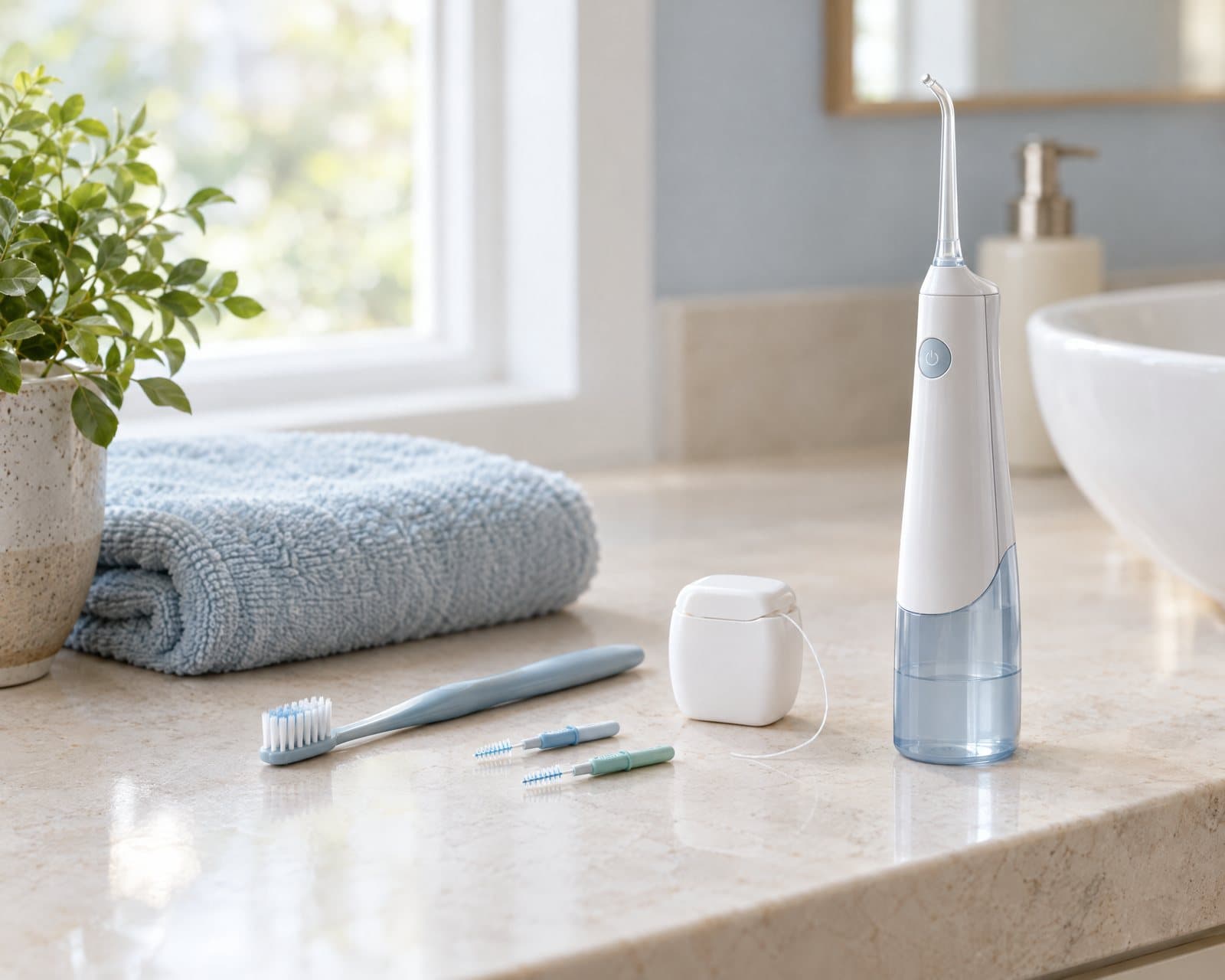
Floss, interdental brushes and water flossers all clean the surfaces a toothbrush misses between teeth and around implant posts. Which one fits best depends on the size of the gaps and what you're cleaning around.
A water flosser can reach under a bridge or around wider gaps more easily than string floss, but whether it can fully replace floss for you depends on your particular mouth. Ask which combination fits your situation.
Interdental brushes, small bristled picks sized to fit between teeth, are often easiest around implants and orthodontic wire, since they need less dexterity than floss.
| Tool | Best for | Tip |
|---|---|---|
| Soft or electric toothbrush | Every surface, twice daily | Angle bristles at the gumline |
| Floss or implant floss | Tight spaces between natural teeth | Curve it around each tooth, not just up and down |
| Interdental brushes | Wider gaps and around implant posts | Pick a size that fits snugly without forcing |
| Water flosser | Under bridges and around wider gaps | Aim along the gumline, not straight at it |
| Floss threader | Getting floss under a fixed bridge | Thread it once, then floss as usual |
How do you clean under bridges, full arches and snap-in dentures?
A bridge, a fixed full arch and a snap-in denture each cover natural cleaning surfaces, so plaque builds up underneath if it's skipped. Each needs its own approach to reach that hidden space.
Under a fixed bridge, a floss threader or a tiny brush pulls floss or bristles beneath the false tooth. Under a fixed full arch, a water flosser and interdental brushes usually reach best along its length.
A snap-in denture comes out nightly for cleaning. Brush it separately with a denture brush, and clean the attachments on the implants underneath with a soft brush before it goes back in.
What are the warning signs around an implant?
Watch for gum bleeding or swelling around an implant, a bad taste or smell that doesn't go away, or a crown or bridge that feels loose. Any of these can point to inflammation around the implant. In the gum alone it's called peri-implant mucositis; once bone is being lost, it's called peri-implantitis.
Caught early, gum-level inflammation often settles with a thorough professional cleaning and a closer look at your home routine. Peri-implantitis is harder to treat, can need surgery, and left alone can cost an implant its bone support.
If you notice any of these signs, don't wait for your next scheduled visit. Call sooner instead.
How often do you need professional cleanings?
Most people need a professional cleaning every three to six months, and implants generally follow the same interval as natural teeth. Your periodontal maintenance schedule is set individually, based on how your gums and implants have responded.
Daily brushing and cleaning between teeth keep plaque down between those visits, but they can't fully replace the instruments used in the chair. The two work together, not as substitutes for one another.
Care at Perio One
At Perio One in Lafayette, your daily routine is reviewed as part of every visit, not just assumed. Dr. Randal Comeaux, DDS, Diplomate of the American Board of Periodontology, checks how your implants, bridges or treated gums are responding. He adjusts your home routine if something needs to change.
We coordinate with your general dentist so your daily care and your professional visits point the same direction. Referrals are welcome, and our periodontal maintenance program keeps that routine on track over time.
When to call us
- Bleeding or swelling around an implant
- Pus or a bad taste near an implant
- An implant crown or bridge that feels loose
- Gum pulling back from an implant
Our periodontists, Dr. Randal Comeaux and Dr. Lauren Langlois, can talk through what you’re noticing.
Call to scheduleWhat to expect
- Morning and night brushing
Two minutes with a soft or electric brush, covering every surface including the gumline.
- Cleaning between teeth
Floss, an interdental brush or a water flosser once a day, chosen to fit your spacing.
- Special care around restorations
A floss threader for bridges, or removal and separate brushing for a snap-in denture.
- Watching for warning signs
Bleeding, swelling or a bad taste near an implant are checked and reported promptly.
- Professional cleanings
Regular maintenance visits catch what daily care alone can miss.
Common questions
Can you floss dental implants?
Yes. Implants are flossed the same way natural teeth are, gently curving the floss around the post rather than snapping it against the gum. Implant-specific floss or a floss threader can help reach tighter spots.
Can you use a water flosser on implants?
Yes, a water flosser is a common addition around implants, especially under a bridge or a wider gap. Whether it can replace floss for you depends on your particular mouth, so ask which combination fits best.
What is the best toothbrush for implants?
A soft-bristled or electric toothbrush is generally the safest choice around implants, since firmer bristles can be harder on the surrounding gum. Gentle strokes at the gumline matter as much as the brush itself.
How do you clean under a dental bridge?
A floss threader or a small brush designed for bridges pulls floss or bristles underneath the false tooth, where a toothbrush alone can't reach. A water flosser can help clear that space too.
What is peri-implantitis?
Peri-implantitis is an infection around a dental implant that has started to destroy the bone holding it. It usually begins as gum inflammation called peri-implant mucositis, which is easier to reverse. Bleeding, swelling or a bad taste near an implant are early signs worth reporting.
How do you clean full arch implants?
A fixed full arch is cleaned along its length with a water flosser and interdental brushes, since it's harder to floss the way separate teeth are flossed. Regular maintenance visits also check the areas that are hardest to see at home.
Sources
- MouthHealthy (American Dental Association): Flossing
- MouthHealthy (American Dental Association): Brushing your teeth
- Cleveland Clinic: Oral hygiene
- American Academy of Periodontology: Gum disease prevention
This page is general education, not a diagnosis. Your periodontist will recommend care after an examination.