
On this page
- Watch the video
- What is a dental implant, and what are its parts?
- Who is a good candidate, and why see a periodontist?
- How does the dental implant process work?
- Can implants replace one tooth, several, or a whole arch?
- What is recovery like, and how long do implants last?
- What are the risks of dental implants?
- What affects the cost of dental implants?
- Care at Perio One
- When to call us
- What to expect
- Common questions
At a glance
- An implant has three parts: the post in the bone, a connector, and the crown, bridge or denture on top.
- Periodontists train for years beyond dental school in the gums and bone that support implants.
- Healthy gums, enough bone and manageable health conditions matter more than age alone.
- The process runs over several months, from exam to the final teeth, and grafting can add time.
- Implants can replace a single tooth, several teeth or a whole arch, with different options for each.
Your dental implant, step by step
30 seconds, with sound and captions. Illustration only.
Explore this topic
Compare options
Replacing many teeth
During treatment
What is a dental implant, and what are its parts?
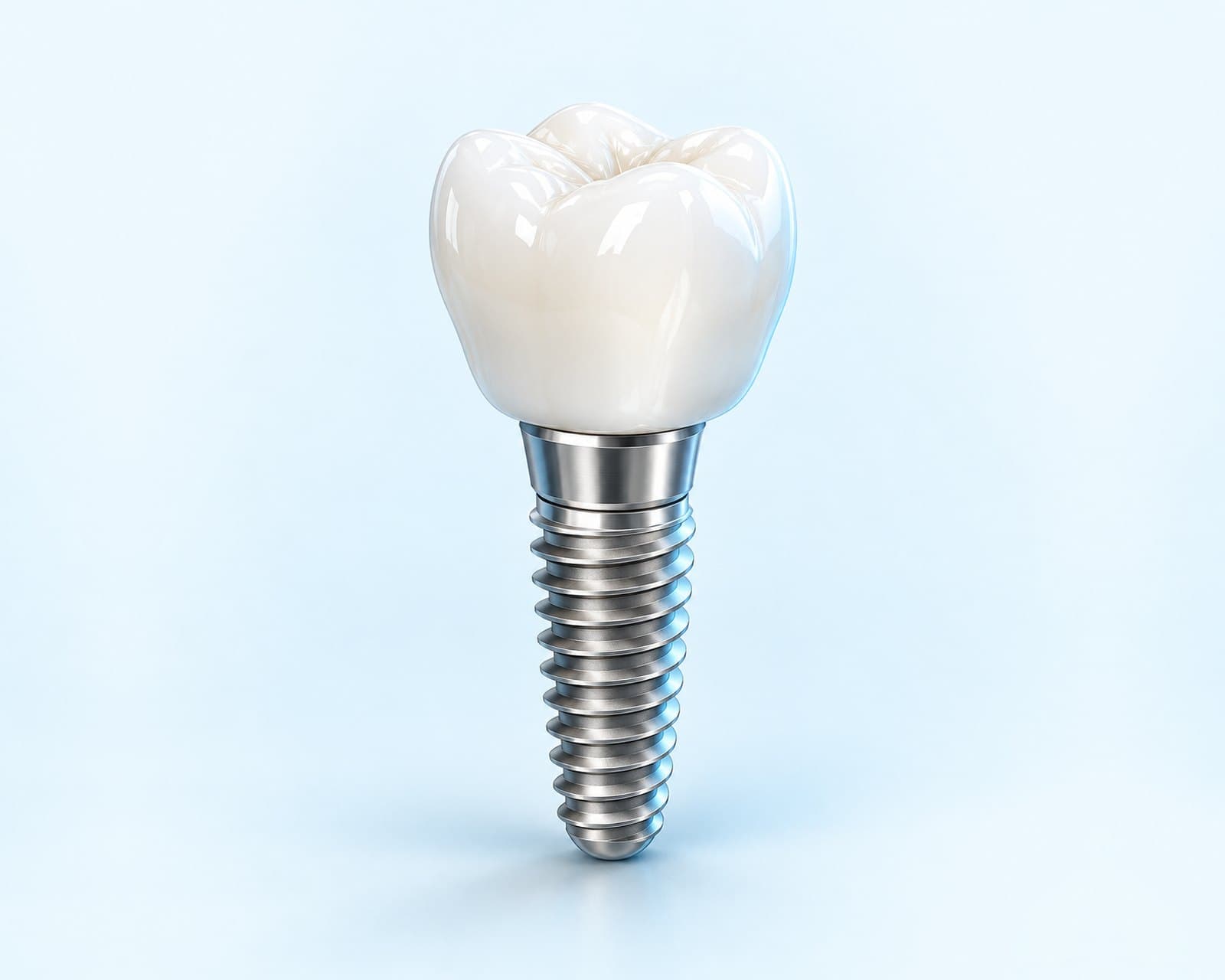
A dental implant is a small post, usually titanium, placed in the jawbone where a tooth root used to be. Bone grows against it over a few months, anchoring it in place. Once healed, it works like a root for the replacement tooth on top.
Three parts make up the finished implant. The implant itself sits in the bone. An abutment, a small connector, attaches to the top of the implant. A crown, bridge or denture is then fixed onto the abutment, and that visible piece is usually made by your general dentist.
Because the post stands on its own in the bone, it does not rely on the teeth next to it for support. That is different from a dental implant vs bridge approach for a single gap.
| Part | What it is | Where it sits |
|---|---|---|
| Implant | A small titanium post | In the jawbone, where the root used to be |
| Abutment | A connector piece | Attached to the top of the implant |
| Crown, bridge or denture | The visible replacement tooth or teeth | Fixed onto the abutment |
Who is a good candidate, and why see a periodontist?
Good candidates usually have healthy gums, or gum disease that has been treated, and enough bone to support a post. General health matters more than age; many people in their seventies and eighties do well with implants.
Uncontrolled diabetes, smoking and some medicines that affect bone can make healing less predictable, though they do not automatically rule someone out. Past radiation to the jaw is also part of the review.
An exam and imaging, often including a cone beam CT scan, show your bone and gum health directly. That picture, not your age or a general assumption, decides candidacy.
A periodontist trains for years beyond dental school specifically in the gums and bone that support implants. Care is usually shared: at Perio One, we place the implant and manage the surrounding gum and bone, while your dentist typically designs and fits the final crown, bridge or denture.
How does the dental implant process work?
The process runs in stages, from an exam through healing to the final teeth. Timing depends on your bone and how many teeth are involved, so the steps below are typical rather than fixed.
After the exam and imaging, the implant is placed in the bone during a minor surgery with local anesthetic. Over the following months, bone forms around the post in a process called osseointegration. Once healed, an abutment and the final crown, bridge or denture are attached, often by your general dentist.
If bone is too thin or short, a dental bone graft may be needed first, which adds time before the implant can be placed.
Can implants replace one tooth, several, or a whole arch?
Implants scale to how much you are missing. One implant can support a single crown. Two or more can anchor a fixed bridge across several gaps. A full arch can rest on a set of implants, either as a fixed bridge or a removable denture that snaps into place.
The right combination depends on how many teeth are missing, where they sit and how much bone remains. The dental implant options page compares these side by side, and implants vs dentures weighs implants against conventional dentures for someone missing most or all of their teeth.
What is recovery like, and how long do implants last?
Expect some swelling and tenderness for a few days after placement, with most people back to normal activity within a day or two. You will eat soft foods and chew on the other side while the bone heals over the following months.
Implants can last many years with healthy gums, daily cleaning around implants and regular checkups. How long any implant lasts depends on your health, bone, whether you smoke, and how consistently you keep up with maintenance visits.
What are the risks of dental implants?
Implant surgery is a well-established, low-risk procedure, though every surgery carries some risk. Infection and an implant that fails to bond with the bone are possible. In the lower jaw, a nerve injury can cause lip or chin numbness that is usually temporary but occasionally permanent. In the upper jaw, an implant can affect the sinus.
The main long-term risk is peri-implant disease, an infection in the gum and bone around an implant that can loosen it over time if left unchecked. Smoking, uncontrolled diabetes and skipped maintenance visits raise that risk, which is why regular checkups matter after the implant heals.
What affects the cost of dental implants?
Cost depends on how many implants you need, whether grafting comes first, and the type of replacement tooth or teeth on top. An exam is the only way to know your specific plan.
- How many implants and which areas of the mouth are involved
- Whether a bone graft or sinus lift is needed before the implant
- The type of imaging used to plan treatment
- Whether the final crown, bridge or denture is simple or more involved
- Any temporary tooth worn while you heal
- How your specific dental benefits handle implant treatment
Care at Perio One
At Perio One in Lafayette, every implant plan starts with an examination before any treatment is scheduled. Dr. Randal Comeaux, DDS, Diplomate of the American Board of Periodontology, reviews your gums, bone and health history and explains the findings in plain language.
Planning often uses 3D cone beam CT imaging, so the implant can be placed with the surrounding nerves, sinuses and bone in view. We coordinate with your general dentist, who typically makes the final crown, bridge or denture, so both offices work from one plan.
Referrals from Lafayette-area dentists are welcome. Once your implant has healed, our periodontal maintenance program helps keep the gum and bone around it healthy for years to come.
When to call us
- A tooth is cracked or failing and may need to come out
- A denture that slips or rubs
- An existing implant that bleeds, swells or feels loose (call promptly)
- You are about to have a tooth removed and want to ask about keeping the bone
- After implant surgery, call us right away for fever, swelling that keeps spreading, or bleeding that won't stop with firm pressure. Trouble breathing or swallowing, or any severe symptom, means an emergency room visit or a 911 call.
Our periodontists, Dr. Randal Comeaux and Dr. Lauren Langlois, can talk through what you’re noticing.
Call to scheduleWhat to expect
- Get in touch
Reach out directly, or have your dentist send a referral our way. It helps to have your current medicines and any recent X-rays on hand.
- Examination and imaging
We review your health history, check your gums and bone, and often take a 3D scan if implants are being considered.
- Your plan, explained
Dr. Comeaux explains what the exam found, whether grafting is needed, and what to expect at each stage.
- Implant placement
The implant is placed in the bone during a minor surgery with local anesthetic.
- Healing
Bone forms around the implant over the following months, while you wear any temporary tooth needed.
- Final teeth
An abutment and the final crown, bridge or denture are attached, often by your general dentist.
- Maintenance
Regular maintenance visits check the gum and bone around your implant for years afterward.
Common questions
Do dental implants hurt?
The placement surgery uses local anesthetic, so you shouldn't feel pain during it. Afterward, expect some soreness and swelling for a few days, similar to having a tooth removed, which usually settles with rest and simple care.
How long do dental implants last?
Many implants last for years with healthy gums, daily cleaning and regular maintenance visits. How long any single implant lasts depends on your health, bone, smoking status and how consistently the surrounding gum and bone are cared for.
How long does it take to get dental implants from start to finish?
The full process often runs several months, from the exam through healing to the final crown, bridge or denture. Grafting before the implant, or extra healing time, can lengthen the timeline; your exam gives a realistic estimate for your mouth.
Can you get dental implants with bone loss?
Often, yes. When bone is too thin or short, a dental bone graft can rebuild enough support before or during implant placement. A 3D scan shows exactly how much bone is present and whether grafting is needed first.
Can you have dental implants with gum disease?
Active gum disease is usually treated first, because it can affect healing around an implant later. Once your gums are stable, implants can often go ahead as part of an ongoing periodontal maintenance plan.
Are dental implants worth it?
For many people missing one or more teeth, implants restore chewing and help preserve the bone that would otherwise shrink. Whether they are worth it for you depends on your health, your bone, your goals and how the cost and timeline compare with other options like a bridge or denture.
Sources
- Cleveland Clinic: Dental implants
- American Academy of Periodontology: Dental implant procedures
- MouthHealthy (American Dental Association): Implants
- American Academy of Periodontology: What is a periodontist?
This page is general education, not a diagnosis. Your periodontist will recommend care after an examination.