
On this page
- What are implant supported dentures?
- How do snap-in dentures attach?
- How many implants do snap-in dentures need?
- What is daily life like with snap-in dentures?
- What is recovery like after the implants are placed?
- What are the risks and upkeep?
- What affects the cost of implant supported dentures?
- Care at Perio One
- When to call us
- What to expect
- Common questions
At a glance
- Snap-in dentures click onto two or more implants, so they sit far more securely than a denture that rests on the gum alone.
- Most people remove them for cleaning and for sleep, then click them back in each morning.
- A lower denture often needs only two implants; the upper jaw usually needs more, because its bone is softer.
- The small attachments wear with use, so they need periodic replacement, and the denture may need relining over the years.
What are implant supported dentures?
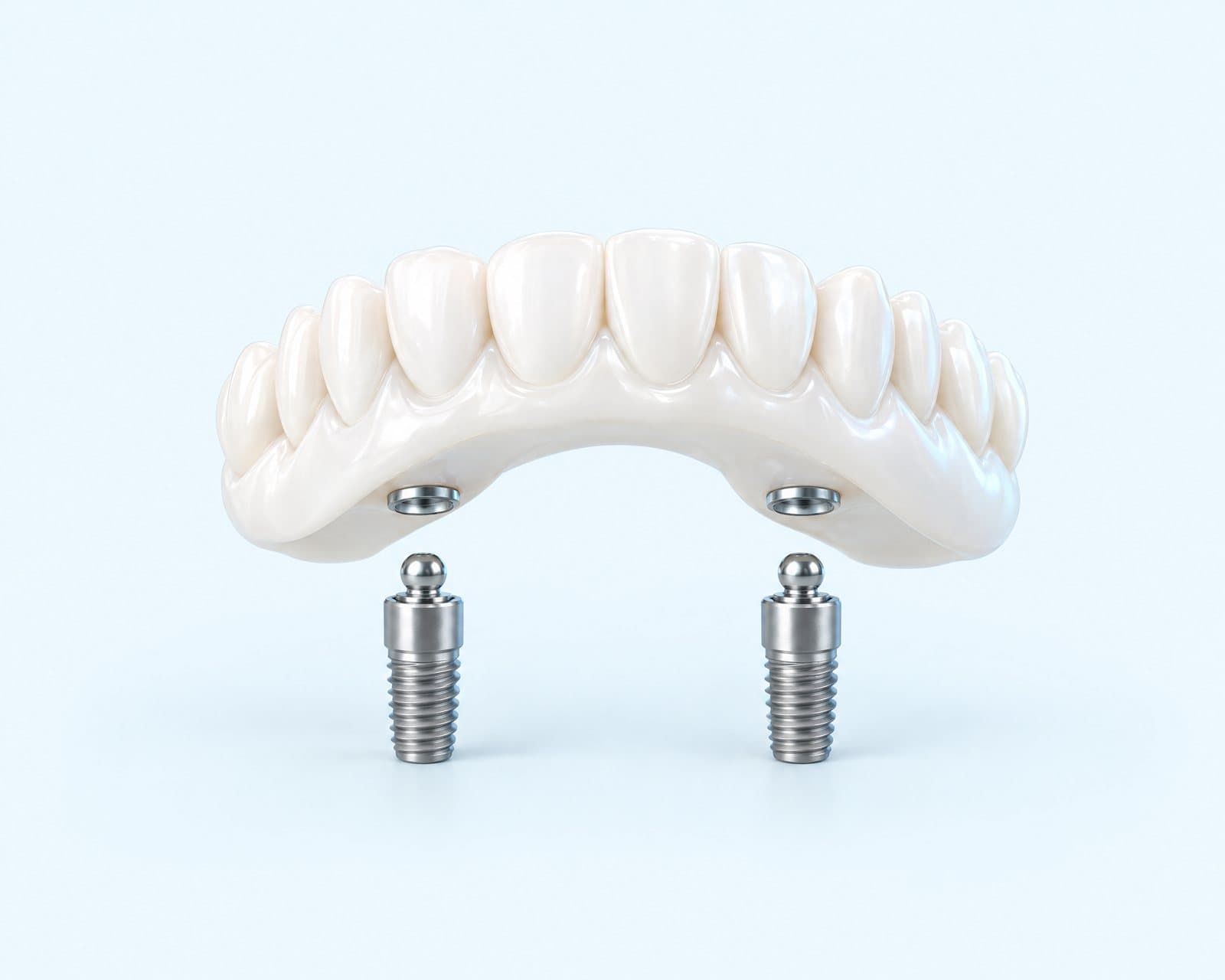
This option is a removable denture that snaps onto implants instead of resting only on the gum. Small attachments on the implants join matching attachments inside the denture, so it clicks firmly into place. You still take the denture out to clean it and, usually, overnight.
Compared with a regular denture, the implants add stability, especially for a lower denture, which often floats on a thin ridge of bone. Many long-time denture wearers switch to this option when a lower denture won't stay put, even with adhesive. A full arch dental implants restoration is the fixed alternative, staying in your mouth at all times. See implants vs dentures for a fuller comparison.
How do snap-in dentures attach?
The implants each carry a small attachment, and the denture has matching attachments built into its underside. When you press the denture into place, the two click together, and light finger pressure releases them again. A metal bar joining several implants is another design, giving the denture one attachment to snap onto instead of several small ones.
Both designs are removed the same way: you rock the denture gently to release the snaps, lift it out, clean it, and click it back in. Attachments wear down with daily use, so a dentist periodically swaps in new ones to keep the click snug.
How many implants do snap-in dentures need?
A lower snap-in denture is often anchored to two or more implants. The upper jaw usually needs more implants than the lower, because its bone tends to be softer. An upper denture also loses some of the suction that helps a regular upper denture stay put.
Your bone volume, bite forces and whether you clench or grind also factor into the number Dr. Comeaux recommends. If bone is thin, building it up first can be part of the plan before implants go in.
What is daily life like with snap-in dentures?
Snap-in dentures feel steadier than a regular denture, especially when chewing firmer foods. Most people take the denture out at night to rest the gums, then click it back in after breakfast. Learning how to clean implant dentures and the implants underneath protects both.
Speech and biting feel close to normal for most people after a short adjustment period. Sticky or very hard foods are worth approaching carefully at first, since the denture can still shift slightly under heavy force.
What is recovery like after the implants are placed?
The implants need time to heal into the jawbone before the denture's attachments are added, usually a few months. You wear a temporary denture during that time, adjusted so it doesn't press on the healing implants. Swelling and soreness are common for the first few days and settle quickly.
Once healing is confirmed, attachments are fitted to the implants and matched inside your denture, or a new denture is made to fit them. A short adjustment period is normal while you get used to the click and the new fit.
What are the risks and upkeep?
Implant supported dentures are a well-established option, and serious problems are uncommon. The attachments wear with daily use and need periodic replacement to keep a secure click. The denture itself may need relining over the years as your gums and bone change shape.
Gum tissue around an implant can become inflamed if plaque builds up around it, a condition called peri-implant disease that needs prompt attention. Rarely, an implant does not stay firmly anchored in the bone and needs to be addressed. Regular periodontal maintenance visits catch these problems early.
What affects the cost of implant supported dentures?
The number of implants, whether bone grafting is needed first, and the type of attachment all affect the total cost. Converting an existing denture to snap onto new implants can sometimes cost less than starting with a new denture. Your exam sets the actual estimate for your mouth.
- The number of implants and the type of attachment, bar or individual snaps
- Whether bone needs to be built up before implants can be placed
- Whether your current denture can be adjusted to fit, or a new one is needed
- The imaging used to plan implant placement
- Future upkeep, including attachment replacement and occasional relining
- Your dental plan, which may cover implants and dentures differently
Care at Perio One
At Perio One, planning for implant supported dentures begins with an examination of your gums, bone and remaining teeth. Dr. Randal Comeaux, DDS, Diplomate of the American Board of Periodontology, reviews the findings with you in plain language before recommending a number of implants.
Implant placement is often planned with 3D cone beam CT imaging, so the position of each implant can be mapped in advance. We coordinate with your general dentist or the dentist fitting your denture, so both offices work from one plan.
Referrals from dentists in and around Lafayette are welcome, and once your denture is in place, our periodontal maintenance program checks the gum tissue around each implant.
When to call us
- The denture rocks or rubs
- Snaps feel loose or click out
- Gum around an implant is swollen or bleeds
- A crack in the denture
- After your implants are placed, call us right away for a fever, swelling that grows or spreads, or bleeding that firm pressure won't slow. If symptoms turn severe, or it's hard to breathe or swallow, go to an emergency room or call 911.
Our periodontists, Dr. Randal Comeaux and Dr. Lauren Langlois, can talk through what you’re noticing.
Call to scheduleWhat to expect
- Examination
We check your gums, remaining teeth, bite and bone, and take any imaging needed to plan implant placement.
- Implant placement
The implants are placed in the jawbone during a short procedure with local anesthetic, and you wear a temporary denture while they heal.
- Healing
Over a few months, the bone bonds to the implants. A follow-up visit confirms they are ready to carry a denture.
- Attachments fitted
Snap attachments are added to the implants and matched inside your denture, or a new denture is made to fit them.
- Ongoing care
Daily cleaning, periodic attachment replacement and maintenance visits keep your denture snug over time.
Common questions
How many implants for snap-on dentures?
A lower denture often attaches to two or more implants. The upper jaw usually needs more, because its bone tends to be softer and loses some of the suction that helps a regular upper denture stay in place. Your exam decides the number for you.
Can implant supported dentures be removed?
Yes. You or your dental team can unclip the denture from the implants whenever needed, unlike a fixed full-arch restoration that stays in your mouth. Most people take theirs out at night and for cleaning.
Do snap-in dentures need to be removed at night?
Usually, yes. Taking the denture out overnight lets your gums rest and reduces the plaque that can build up around the implants while you sleep. Dr. Comeaux can talk through exceptions for your situation.
How long do implant supported dentures last?
With good care, the implants anchoring the denture often last many years. The denture and its attachments wear with daily use, so the attachments are periodically replaced and the denture may need relining or eventual remaking.
What can you eat with implant supported dentures?
Most foods, once you're used to the fit. Very sticky or hard foods are worth approaching carefully at first, since the denture can still shift slightly under heavy force, even with a secure snap.
Are snap-in dentures worth it?
Many long-time denture wearers find the added stability makes a real difference, especially with a lower denture. Whether they suit you depends on your bone, budget and how a fixed alternative compares, which is worth discussing at an exam.
Sources
- Cleveland Clinic: Implant-supported dentures
- MouthHealthy (American Dental Association): Dentures
- American Academy of Periodontology: Dental implant procedures
This page is general education, not a diagnosis. Your periodontist will recommend care after an examination.