
On this page
- What is periodontal endoscopy?
- Who might benefit from periodontal endoscopy?
- What happens during an endoscope-guided cleaning?
- How does it compare with a standard deep cleaning or surgery?
- What is recovery like after periodontal endoscopy?
- Are there risks or limits?
- What affects the cost of periodontal endoscopy?
- Care at Perio One
- When to call us
- What to expect
- Common questions
At a glance
- A thin probe with a camera slips into the gum pocket and shows the root on a monitor, magnified 24–48 times.
- It guides a deep cleaning of the roots, with no cuts or stitches.
- The area is numbed first, so you should feel pressure rather than pain.
- Soreness afterward is usually mild and much like any deep cleaning.
- It can't fix every problem, and some deep pockets still need surgery.
What is periodontal endoscopy?
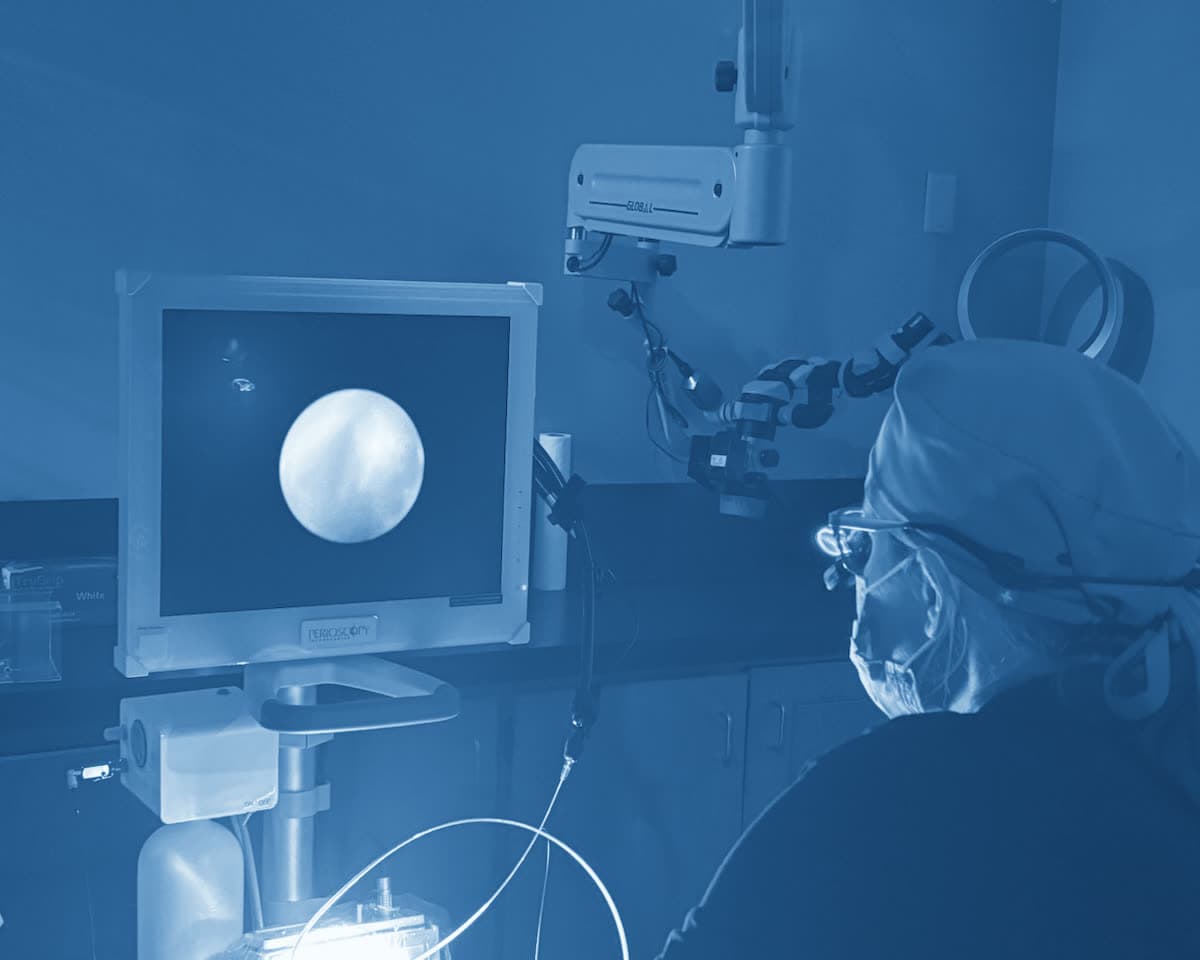
Periodontal endoscopy is a way of seeing below the gumline during a deep cleaning. A tiny camera, about 1 mm across, sits on a thin probe that slides gently into the gum pocket. The view is magnified 24–48 times and shown on a monitor beside the chair.
Tartar on the roots is hard and rough, and it is often close to the color of the tooth. Without a camera, the clinician finds it by feel, using thin instruments. The endoscope adds a direct view, so small deposits and rough spots are easier to find.
It is not a different treatment from scaling and root planing. It is a tool that guides that cleaning, with the same goal: clean, smooth roots that the gums can heal against. If you're not sure which kind of cleaning you need, our guide to periodontal cleanings explains the options.
Who might benefit from periodontal endoscopy?
Endoscopy helps most where tartar is hard to find by touch. That often means deep pockets, roots with grooves, and the spots where the roots of back teeth split apart. It can also help when a few pockets stay deep after an earlier deep cleaning.
Your pocket measurements and X-rays decide whether it makes sense for you. A periodontal exam shows which teeth have deep pockets and where bone has been lost. Not every pocket needs a camera, and many heal well with a standard deep cleaning.
- Pockets that still bleed or measure deep after a first round of cleaning
- Back teeth with branching roots, which are hard to reach
- Teeth with deep grooves or unusual root shapes
- People in maintenance care with one or two trouble spots
- People who want to try a nonsurgical step before surgery is considered
What happens during an endoscope-guided cleaning?
The visit starts like any deep cleaning, with the area numbed by a local anesthetic. The clinician then places the thin camera probe in a pocket and watches the root on the monitor. Tartar is removed with ultrasonic and hand instruments while the camera shows what is left.
A gentle stream of water keeps the view clear. The clinician works around each tooth, pocket by pocket, and checks the root again on screen before moving on. You may hear the water and feel pressure, but the numbing should keep it from hurting.
Seeing the root can also turn up other problems. A crack in a root, a cavity below the gumline or a rough edge on an old filling may show on the screen. If something like that is found, it is explained to you and noted in your chart.
How does it compare with a standard deep cleaning or surgery?
A standard deep cleaning relies on the clinician's sense of touch. Endoscopy adds a magnified view to that same cleaning. Periodontal surgery goes further, opening the gum so the root and bone can be seen directly and treated.
Some studies comparing cleaning with and without an endoscope have found more tartar removed, and better healing, when the camera was used. Results vary from study to study and from person to person. Endoscopy can't rebuild lost bone, and it doesn't replace surgery when a pocket is too deep or a bone defect needs repair.
For some people, endoscopy may help them avoid or delay surgery. No one can promise that ahead of time, because healing depends on pocket depth, the shape of the bone and your daily care.
| What differs | Standard deep cleaning | Endoscope-guided cleaning | Gum surgery |
|---|---|---|---|
| How the root is checked | By touch, with thin instruments | By touch plus a magnified camera view | By direct sight, with the gum opened |
| Cuts or stitches | No | No | Yes |
| Time per area | Shortest | Longer, since each surface is checked on screen | Longest, with more healing time afterward |
| Often used for | Most pockets caused by periodontitis | Deep or stubborn pockets and hard-to-reach roots | Pockets too deep to clean closed, or bone defects that need repair |
What is recovery like after periodontal endoscopy?
Recovery is usually like recovery from any deep cleaning. Your gums may be tender for a few days, and your teeth may be sensitive to cold a little longer. Most people go back to their normal day right after the visit.
Because the gum isn't cut, there are no stitches to look after. Keep brushing gently and cleaning between your teeth, even where the gums bleed a little at first. Over the next few weeks, the gums firm up and bleeding usually eases.
- Wait for the numbness to wear off before eating or drinking anything hot.
- Soft foods can make the first day or two easier.
- A warm salt-water rinse may ease sore gums.
- Use an over-the-counter pain reliever only if you need one and it is safe for you.
- Avoid smoking or vaping, which slow gum healing.
Are there risks or limits?
Periodontal endoscopy carries the same low risks as a deep cleaning. Tenderness, brief bleeding and sensitivity to cold are the most common. As swelling goes down, the gums may sit a little lower and show more of the roots.
That change isn't caused by the camera. It shows gum and bone loss that the swelling used to cover. Rarely, an area becomes infected after cleaning.
Call us if swelling grows, pain gets worse after the first few days, or you run a fever. If swelling spreads toward your eye or neck, or you have trouble swallowing or breathing, go to an emergency room or call 911.
The tool has limits too. Bleeding can blur the view, and a very narrow or very deep pocket may be hard to see into. Tell us about blood thinners and other medicines, since they affect bleeding and how treatment is planned.
What affects the cost of periodontal endoscopy?
The cost depends mostly on how many teeth are treated, and on whether the camera guides a full deep cleaning or just a few stubborn pockets. Any figure given before your gums are measured is only an estimate. Call our office to talk through the cost for your own plan.
- The number of teeth or areas treated
- Whether it is part of a first deep cleaning or a later maintenance visit
- Any X-rays or measurements needed first
- Follow-up visits to recheck the pockets
Care at Perio One
At Perio One, endoscopy is part of our nonsurgical gum care, used when an exam shows it could help. Dr. Randal Comeaux, DDS, Diplomate of the American Board of Periodontology, treats with periodontal endoscopes and operating microscopes. He goes over your measurements and X-rays in plain language before anything is scheduled.
Dr. Lauren Langlois, a board-certified periodontist, treats gum disease both with and without surgery. You can ask either doctor to talk through a camera-guided cleaning, a standard deep cleaning and surgery side by side.
Patients from Lafayette and across Acadiana can call us directly; no referral is needed. We coordinate with your general dentist, and afterward periodontal maintenance visits help keep the treated pockets healthy.
When to call us
- A few pockets stayed deep after a deep cleaning
- Your gums still bleed in the same spots after treatment
- You were told you may need gum surgery and want to know every option
- A back tooth with branching roots keeps getting inflamed
- You have questions about periodontal endoscopy
Our periodontists, Dr. Randal Comeaux and Dr. Lauren Langlois, can talk through what you’re noticing.
Call to scheduleWhat to expect
- Exam and measurements
Your pockets are measured and your X-rays are reviewed to see which teeth could benefit.
- Numbing
The area being treated is numbed with a local anesthetic.
- Camera-guided cleaning
The camera shows each root on a monitor while tartar is removed and the root is smoothed.
- Healing and recheck
Your gums settle over several weeks, and then your pockets are measured again.
- Maintenance
Regular maintenance visits keep the treated areas clean and catch changes early.
Common questions
Does periodontal endoscopy hurt?
It shouldn't hurt during treatment, because the area is numbed with a local anesthetic first. You will feel the probe and instruments as pressure and vibration, and you may hear the water spray. Afterward, gums are often tender for a few days, and teeth may be sensitive to cold. An over-the-counter pain reliever is usually enough, if it is safe for you.
Is periodontal endoscopy the same as gum surgery?
No. Periodontal endoscopy is a nonsurgical cleaning. The camera probe slides into the gum pocket without any cuts or stitches, and it guides the removal of tartar from the roots. Gum surgery opens the gum so the root and bone can be seen and treated directly. Some pockets respond well to endoscopy, while others still need surgery.
Can periodontal endoscopy help me avoid gum surgery?
Sometimes. By showing tartar that touch alone might miss, it can help deep pockets heal without surgery. It can't rebuild bone that has been lost, though, and some pockets are too deep or oddly shaped to clean well without opening the gum. Your measurements after healing show whether more treatment is needed, so no one can promise the result ahead of time.
What can a periodontal endoscope see?
The camera shows the root surface below the gumline, magnified 24–48 times on a monitor. Tartar, rough spots and the edges of old fillings stand out. It can also reveal a crack in a root or a cavity below the gums, which may change your treatment plan. It can't see through bone, so X-rays are still needed.
How long does an endoscope-guided cleaning take?
It depends on how many teeth are treated. Checking each root on a screen takes longer than cleaning by feel, so visits are often planned around one area of the mouth at a time. Your treatment plan will say how many visits to expect and roughly how long each will last. Ask ahead if you need to plan time away from work.
Who is a good candidate for periodontal endoscopy?
People whose gum pockets are deep, bleed, or haven't healed after an earlier deep cleaning are often good candidates. So are people with back teeth whose roots branch apart, since those areas are hard to clean by touch. Your periodontist decides after measuring your pockets and reviewing your X-rays. Many pockets heal well with a standard deep cleaning alone.
Is periodontal endoscopy covered by dental insurance?
It depends on your plan. Endoscopy is usually part of a deep cleaning or a maintenance visit, and plans differ in how they handle deep cleaning and follow-up care. Ask your insurer what it covers and how many visits it pays for each year. You can also call our office to talk through costs before treatment begins.
Sources
- American Academy of Periodontology: Non-surgical treatments
- American Academy of Periodontology: Comprehensive periodontal evaluation
- Cleveland Clinic: Scaling and root planing
- MouthHealthy (American Dental Association): Scaling and root planing
This page is general education, not a diagnosis. Your periodontist will recommend care after an examination.